Technology
What changesis the thickness.
1 mm ← → 5 mm
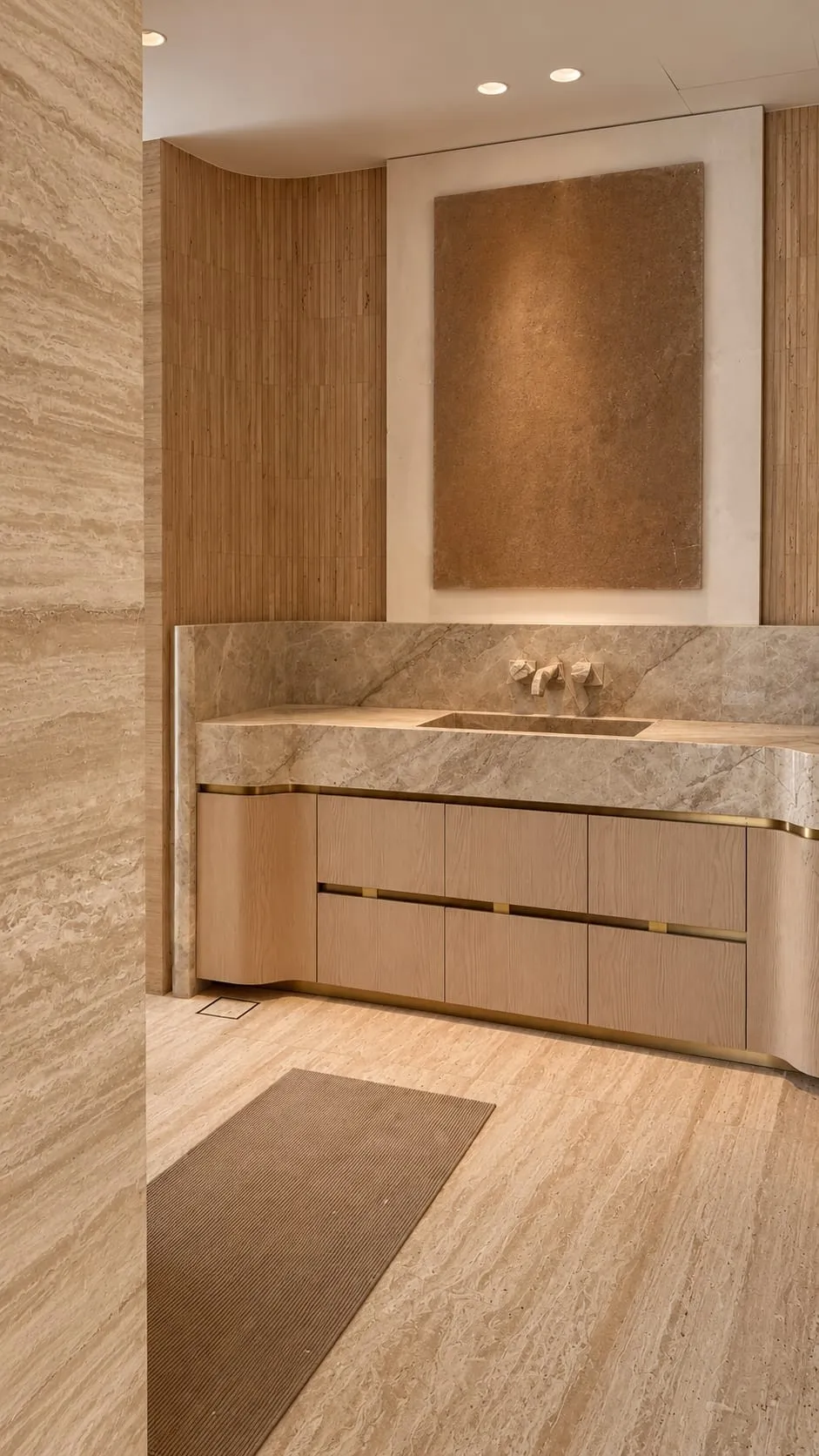
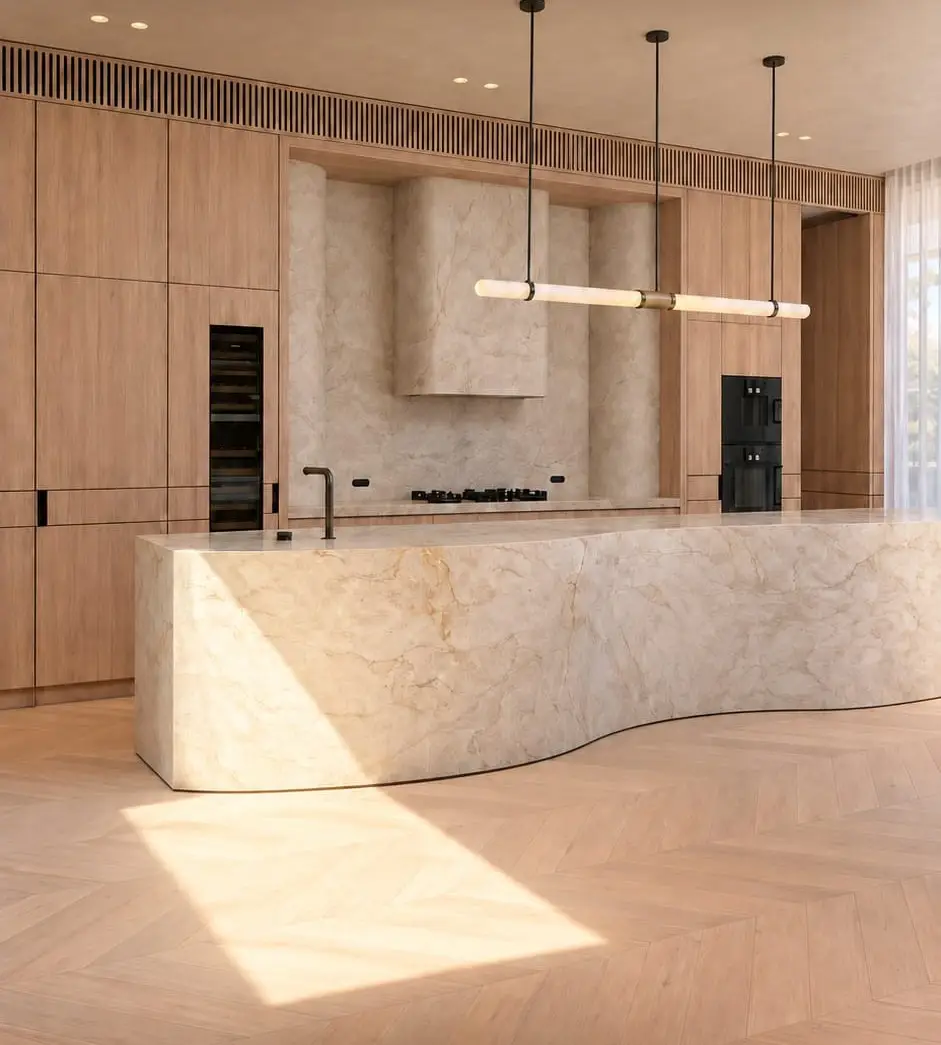
MILLIMETER is not a composite or a surface that imitates stone. It is real marble, quartzite and travertine, processed with a proprietary system down to 1 and 5 millimeters.
Specifications
Technical specifications.
- Thickness
- 1–5 mm
- By material and application. 1 mm is the thickness that curves.
- Weight reduction
- 80–90%
- Against traditional 3/4 in (2 cm) stone over the same surface.
- Formats
- Custom
- Defined per project, not by a slab catalog. Sheets up to about 10 ft (3 m).
- Curvature
- By material
- Travertine and fine-veined marbles take tighter radii than quartzites.
- Installation
- Faster and safer, with fewer breakages on site.
Weight
The structure stops being the limit.
A square meter of 3/4 in marble weighs about as much as a small adult. The same square meter of 1 mm MILLIMETER weighs less than a laptop.
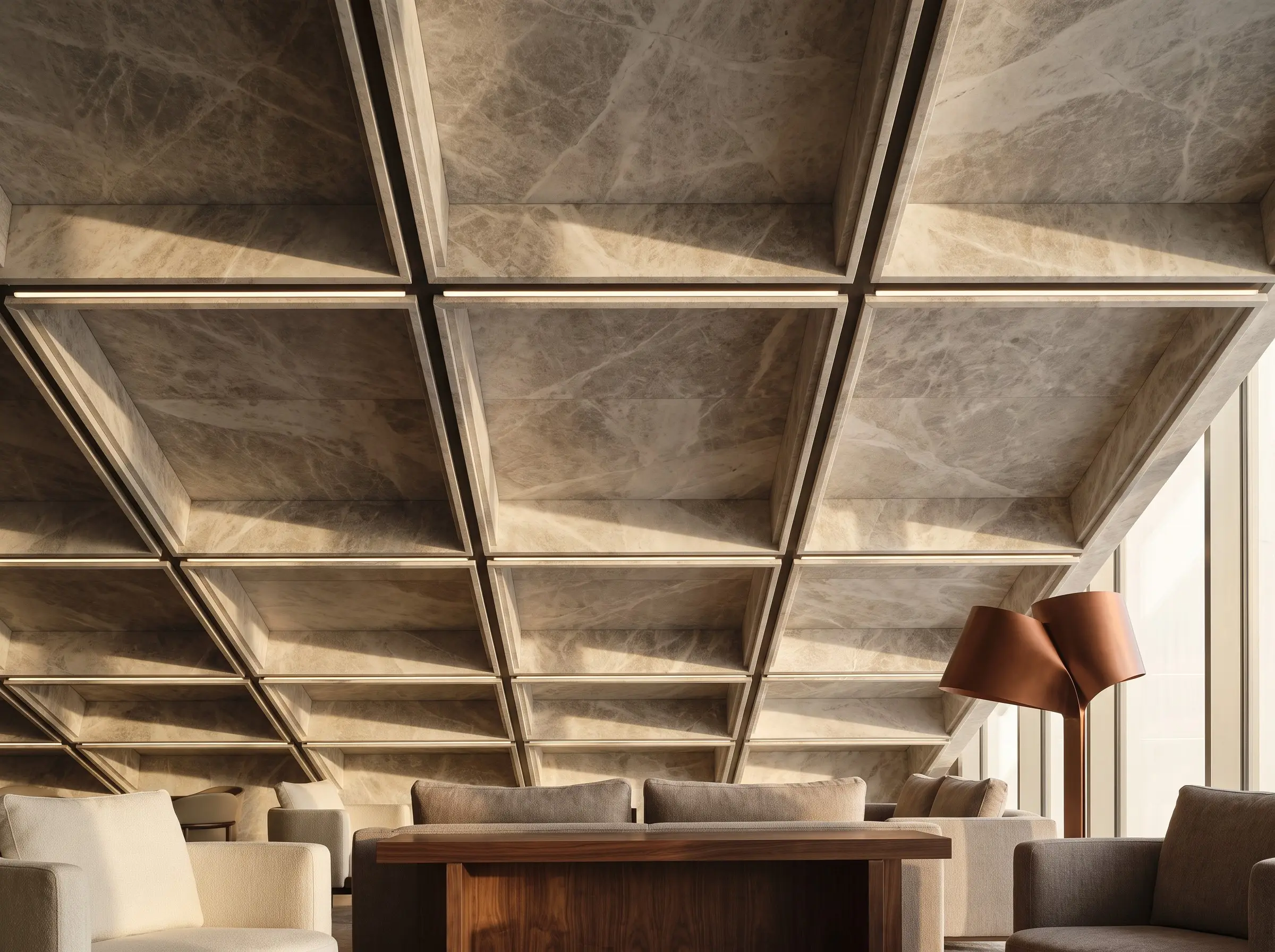
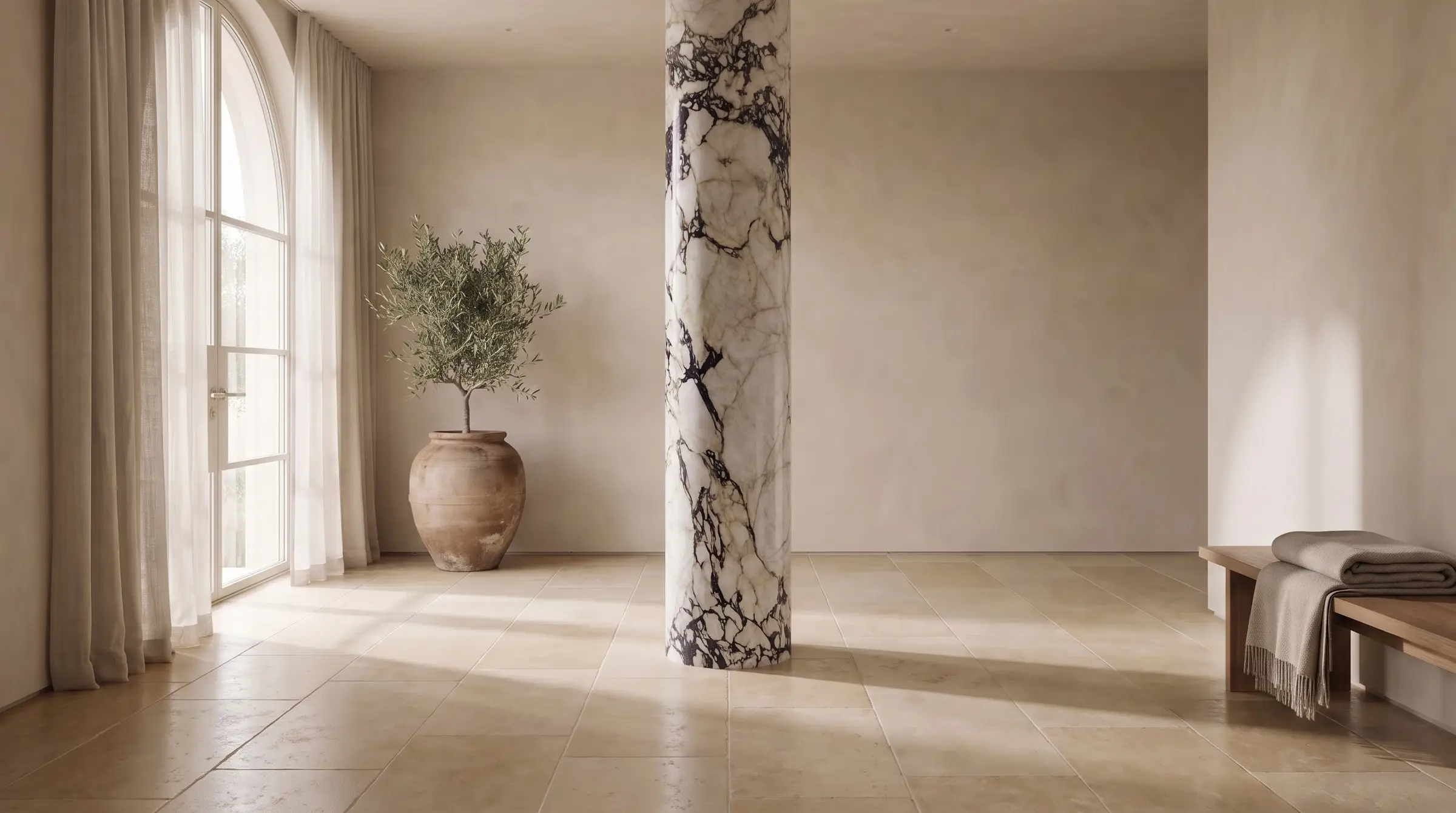
Emperor Light Marble
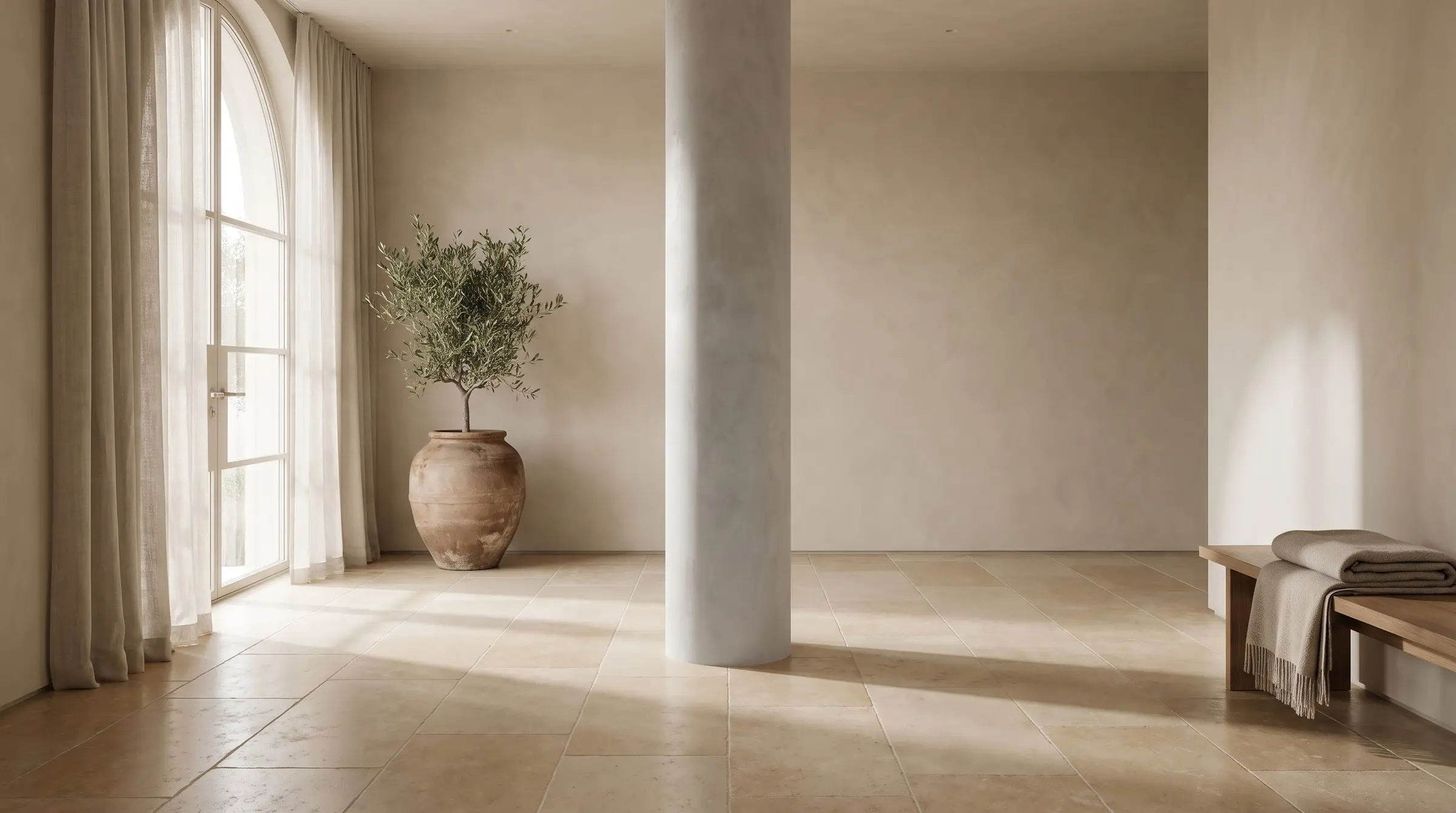
Curvature
A real curve, not a cut.
- An arch or column clad in traditional stone is a sequence of flat pieces with joints the eye picks up.
- At 1 millimeter the stone follows the surface: the curve is continuous and the veining runs straight through it.
- That is the difference between a detail a client forgives and a detail a client remembers.
- 1 mm
- tight curves, columns, arches, cabinet fronts
- 5 mm
- demanding flat surfaces: countertops, integrated sinks
The exact minimum radius depends on the material and the piece. It is confirmed during the project study, before anything is produced.
Health & safety
Silica depends on the stone. Choose it knowingly.
Crystalline silica is why engineered quartz is linked to silicosis in the people who cut and install it. Natural stone is not automatically silica-free: the content depends on the rock. Marble and travertine contain little or none; granite and quartzite contain much more. We specify each stone with that in mind.
Typical crystalline silica content, by stone type
- Marble & travertine Crystalline silica: < 5%
- Granite Crystalline silica: 10–50%
- Quartzite Crystalline silica: ≥ 95%
- Engineered stone (quartz surfaces) Crystalline silica: < 0.2–95%
-
Low-silica stones
Marble and travertine contain little or no crystalline silica: under 5%.
-
Less material per cut
A cut through 1 mm removes one twentieth of the material of a 2 cm slab; through 5 mm, a quarter.
-
Less work on site
Pieces are prepared to the project drawings to keep cutting on site to a minimum.
-
Controls still apply
With any stone, wet cutting, dust extraction and respiratory protection remain essential.
Typical values: every variety differs and is confirmed with its technical data. Source: OSHA–NIOSH Hazard Alert, “Worker Exposure to Silica during Countertop Manufacturing, Finishing, and Installation” (2026). Source (PDF)
Carbon footprint
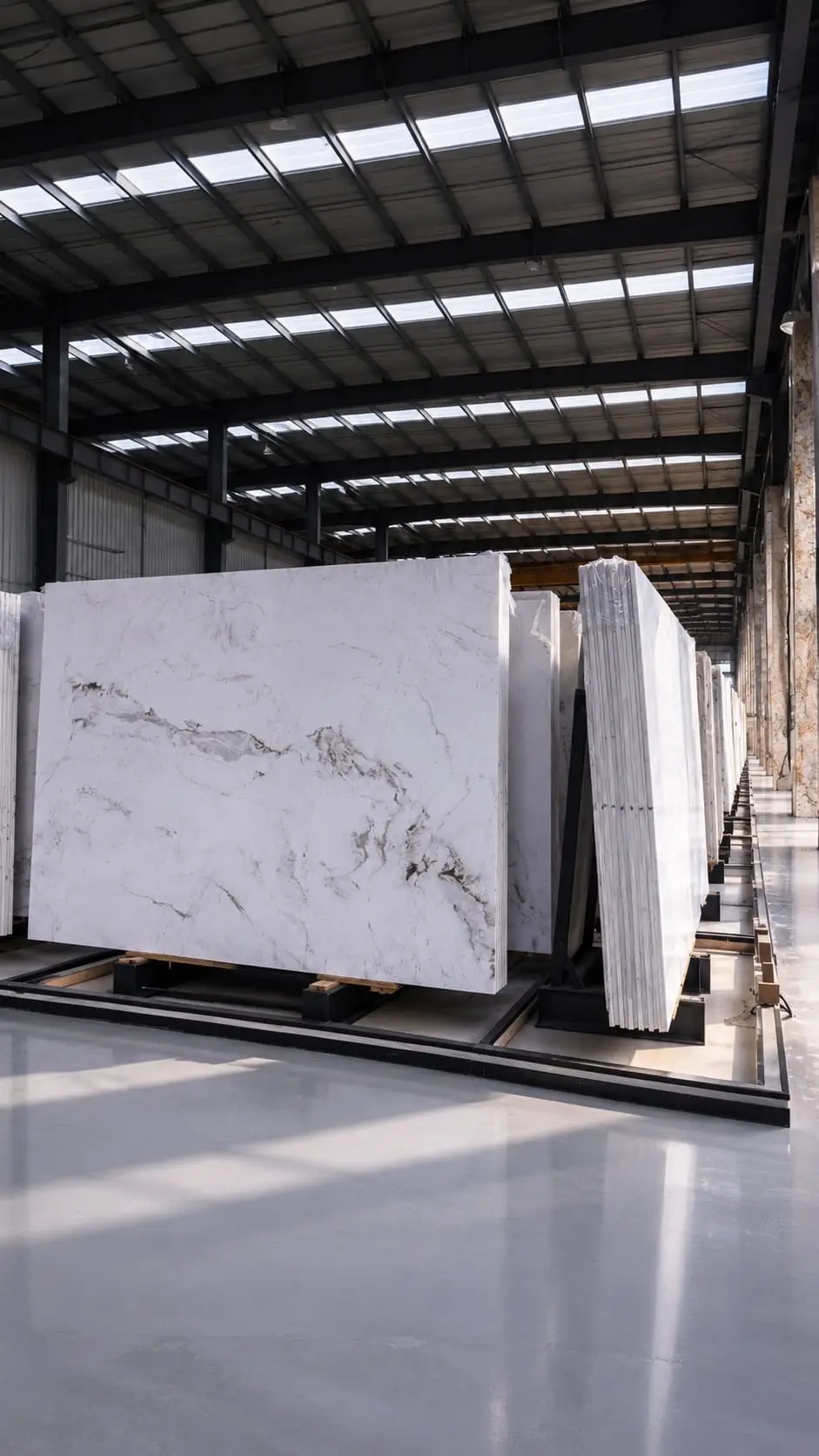
Less thickness, less footprint.
With 1 to 5 millimeters instead of 2 or 3 centimeters, every square foot weighs up to 90% less. We are mindful of our carbon footprint — and it starts with thickness.
- Transport
- Up to 90% less weight per square foot: lighter shipments and less energy to move them.
- Packaging
- Thinner, lighter pieces need less packaging material and take up less freight volume.
- Lifting & handling
- Less weight calls for lighter lifting equipment and anchors, in the shop and on site.
- Material per square foot
- One millimeter of stone covers what used to require two centimeters.
Does it fit your project?
The answer depends on the construction detail, not the catalog. Send the drawing and we will tell you which thickness solves it.
● Reply within one business day
Questions
What architects ask first.
What is MILLIMETER?
Real natural stone — marble, quartzite, travertine and granite — processed with a proprietary system down to a thickness of 1 to 5 millimeters. It is not a composite, a print or an imitation: it is the same stone, without the thickness.
How much does thin natural stone weigh?
MILLIMETER at 1 mm weighs under 1 lb/ft² (under 5 kg/m²) and at 5 mm about 3–4 lb/ft² (15–20 kg/m²). Traditional 3/4 in (2 cm) stone weighs 13–15 lb/ft² (63–73 kg/m²): between 73% and 93% more load on the structure.
Can natural stone really be curved?
Yes. At 1 mm the stone follows a curved surface in one continuous piece, so the veining runs through the curve without joints. Travertines and fine-veined marbles take tighter radii than quartzites; the exact minimum radius is confirmed during the project study.
Which thickness should I specify: 1 mm or 5 mm?
1 mm for tight curves, columns, arches and cabinet fronts. 5 mm for demanding flat surfaces such as feature walls, showers, doors, ceilings, countertops and integrated sinks. Many projects combine both.
Is it safer than engineered quartz?
It depends on the stone you choose, and we will not generalise. According to OSHA and NIOSH, marble and limestones such as travertine typically contain less than 5% crystalline silica, granite 10–50%, quartzite 95% or more, and engineered stone anywhere from under 0.2% to 95%, with conventional quartz surfaces at the top of that range. A MILLIMETER piece in marble or travertine therefore involves far less silica than conventional engineered quartz, and at 1 or 5 mm every cut removes a fraction of the material of a 2–3 cm slab. Whatever the stone, wet cutting, dust extraction and suitable protective equipment remain essential, and we confirm the technical data of the specific stone for each project.
Why choose MILLIMETER and natural stone over other materials?
Because it is the real stone: veining and tones that never repeat, the visual depth only a natural material has, and finishes worked by craftsmen — polished, honed or brushed surfaces, profiled edges, mouldings and mitred corners. Instead of a surface that imitates stone, MILLIMETER lets you work with authentic marble, quartzite or travertine at 1 and 5 mm, extending it to furniture, curves and architectural integration whenever the system and the chosen stone allow it.
How does it compare with engineered quartz and porcelain?
Each material has its place, so we stick to concrete differences. The resins in engineered quartz can be damaged, discolour or lose their sheen under high heat, so hot cookware needs a trivet. Porcelain is hard and stable, but its thin edges need care against impacts and are usually mitred or profiled. Natural stone can be repolished and its edges shaped, and every piece is unique; marble, in turn, is sensitive to acids and is sealed. We will tell you honestly which material suits your use, finish and budget.
Where are you based and where do you work?
MILLIMETER Global LLC is headquartered in Houston, Texas, with commercial presence in the United States, Spain, the United Arab Emirates and Colombia. Built projects include the Wittman Residence in Austin, the Altuve Residence in Houston and the Barret Project in San Diego. We work with architects, designers and private clients worldwide.
How do I get a quote?
Send plans, references or even a hand sketch through the contact form, by email or by WhatsApp. We reply within one business day, review the construction detail with you and only then prepare a closed quote.
Next step
Tell us what
you are designing.
Plans, references or a hand sketch are enough for us to tell you whether MILLIMETER is the right material — and at what thickness.
info@millimeterbycasanova.com