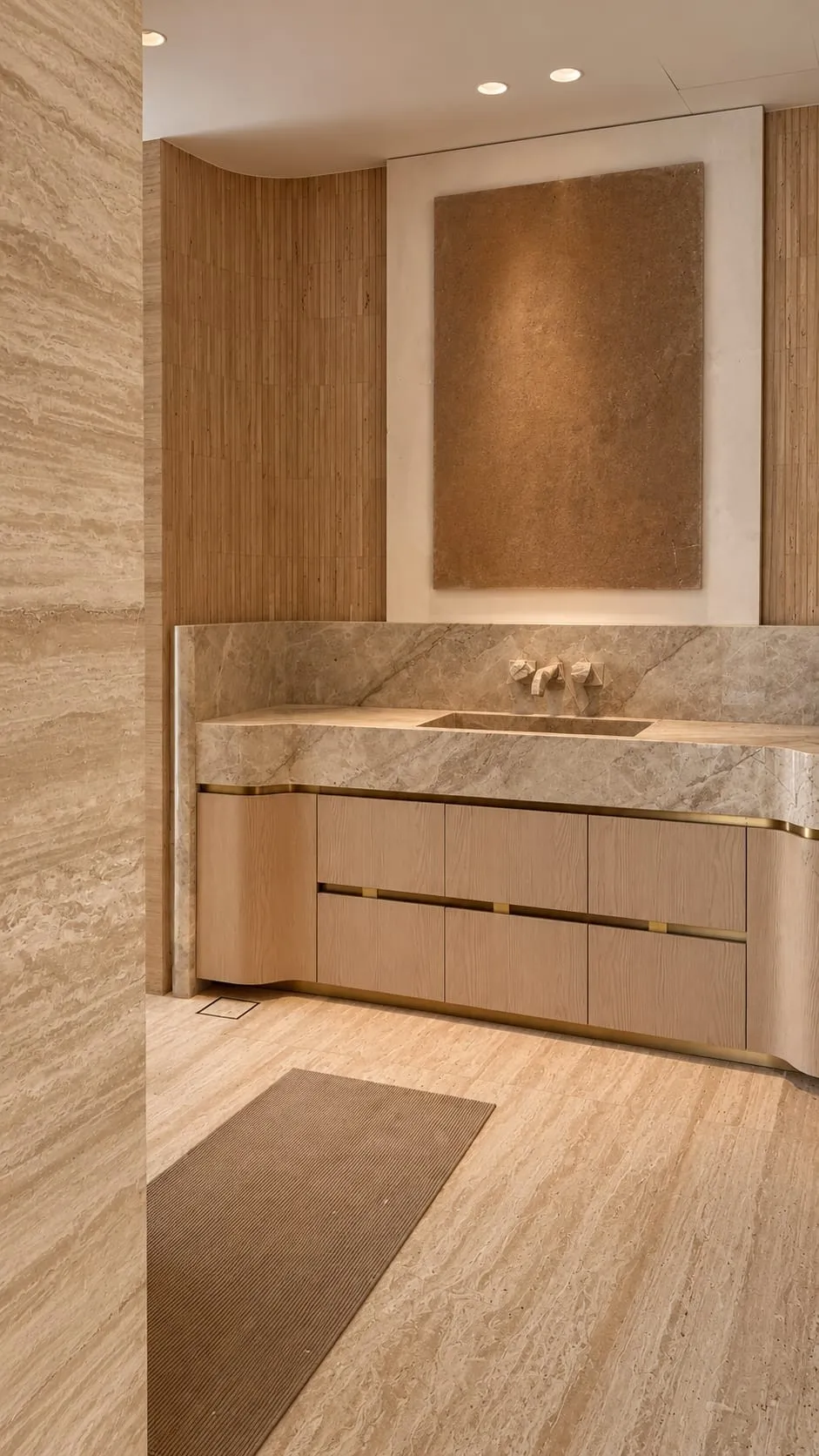
Bianco Superior Quartzite
MILLIMETER by Casanova · Natural stone
Redefiningnatural stone.
20 mm → 1 mm thick · ≈ 13 lb/ft² → 1 lb/ft²
Real marble, quartzite and travertine at 1 and 5 millimeters: up to 90% lighter, able to curve and to become furniture and architecture — and exactly the same stone.
The problem
For centuries, stone set the terms.
Too heavy for most structures. Slow and expensive to install. Impossible to curve. And every piece that reached the site could break before it was set.
- Traditional slab 20 mm · ≈ 13 lb/ft²
- MILLIMETER 5 mm · 3–4 lb/ft²
- MILLIMETER 1 mm · ≈ 1 lb/ft²
MILLIMETER does not replace stone — it removes the thickness that was never doing any work. At 1 to 5 millimeters, stone stops being a structural constraint and becomes a design decision.
| Traditional stone · 3/4 in (2–3 cm) | MILLIMETER · 1–5 mm |
|---|---|
| Excessive weight | 80–90% lighter |
| Slow, costly installation | Faster, safer installation |
| Impossible to curve | Curves and complex geometry |
| High breakage risk on site | Easier, safer handling |
Applications
Eight places stone could not go before.
Each one exists for a concrete reason: weight, curvature or the absence of joints. They are not catalog ideas — they are consequences of the material.
-
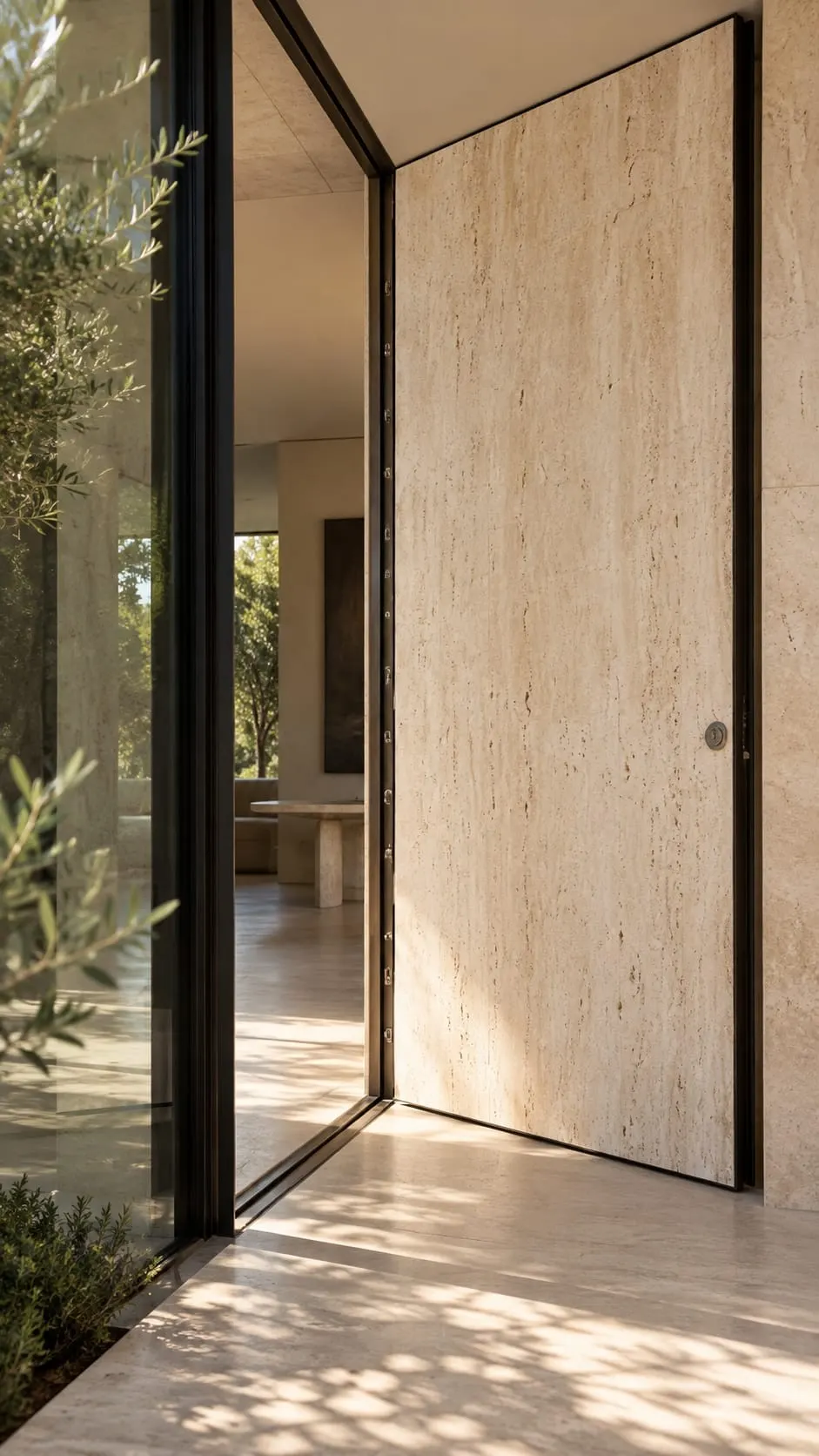 5 mm
Doors & panels
Weight compatible with standard hardware.
-
 1 & 5 mm
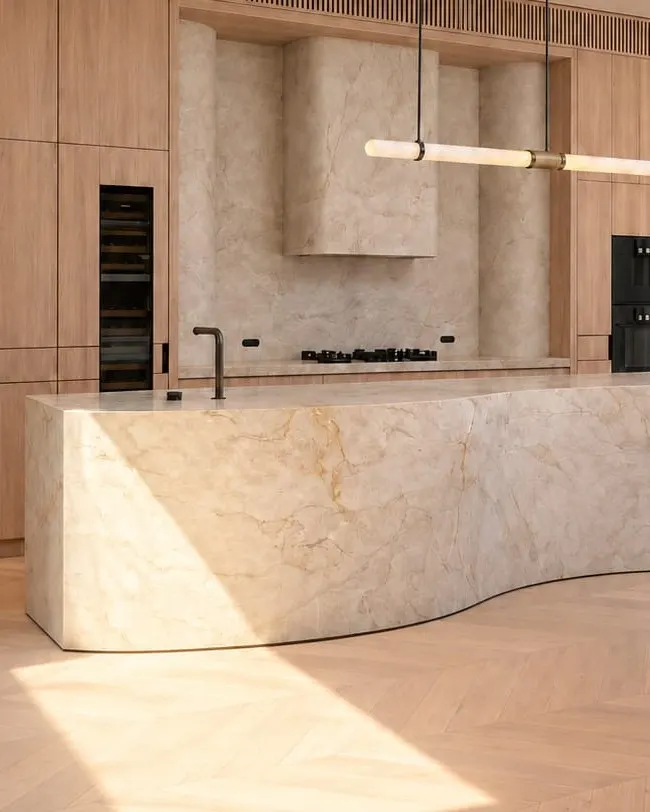
Kitchens
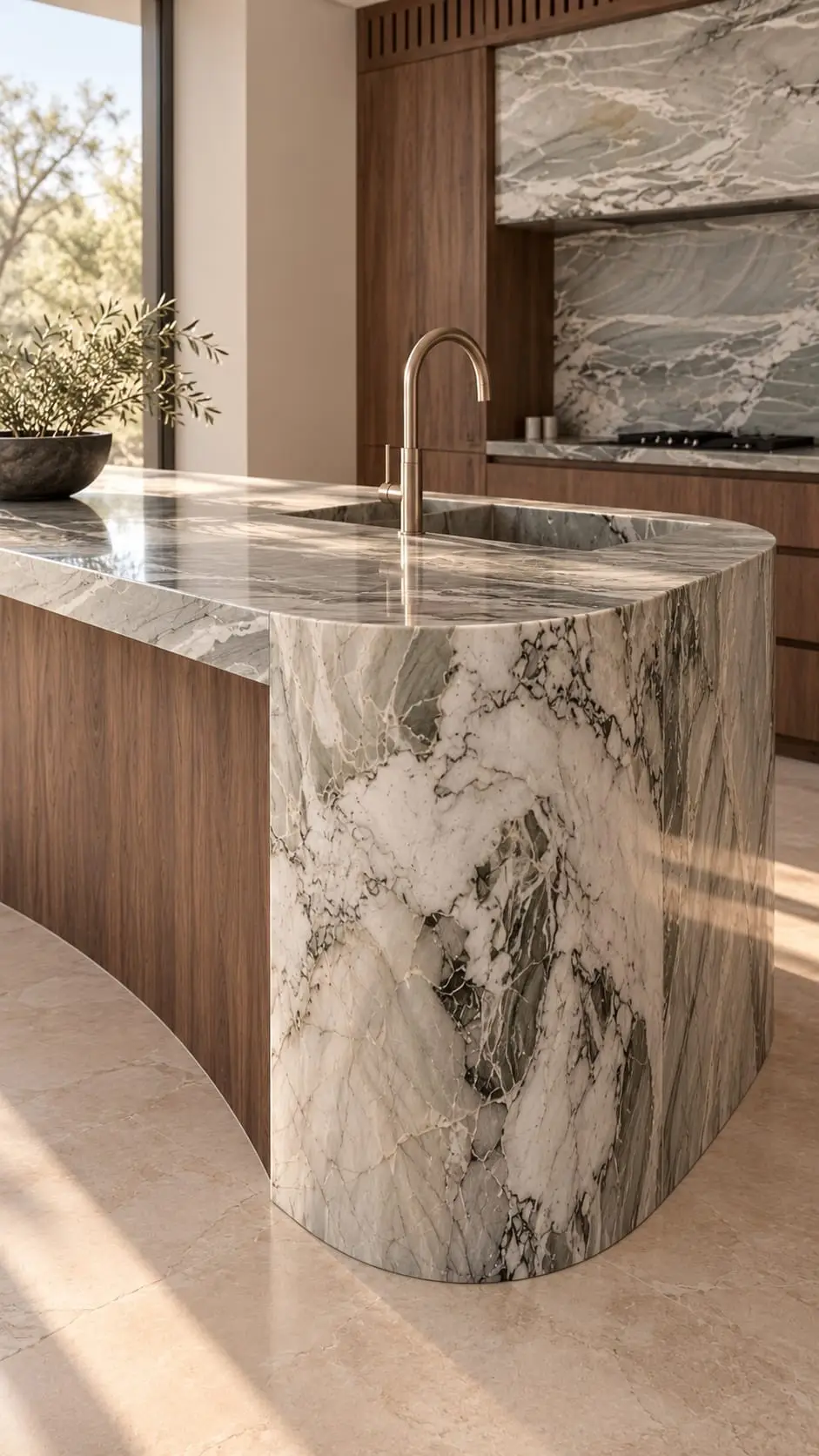
Islands, backsplashes and fronts in real stone.
-
 1 & 5 mm
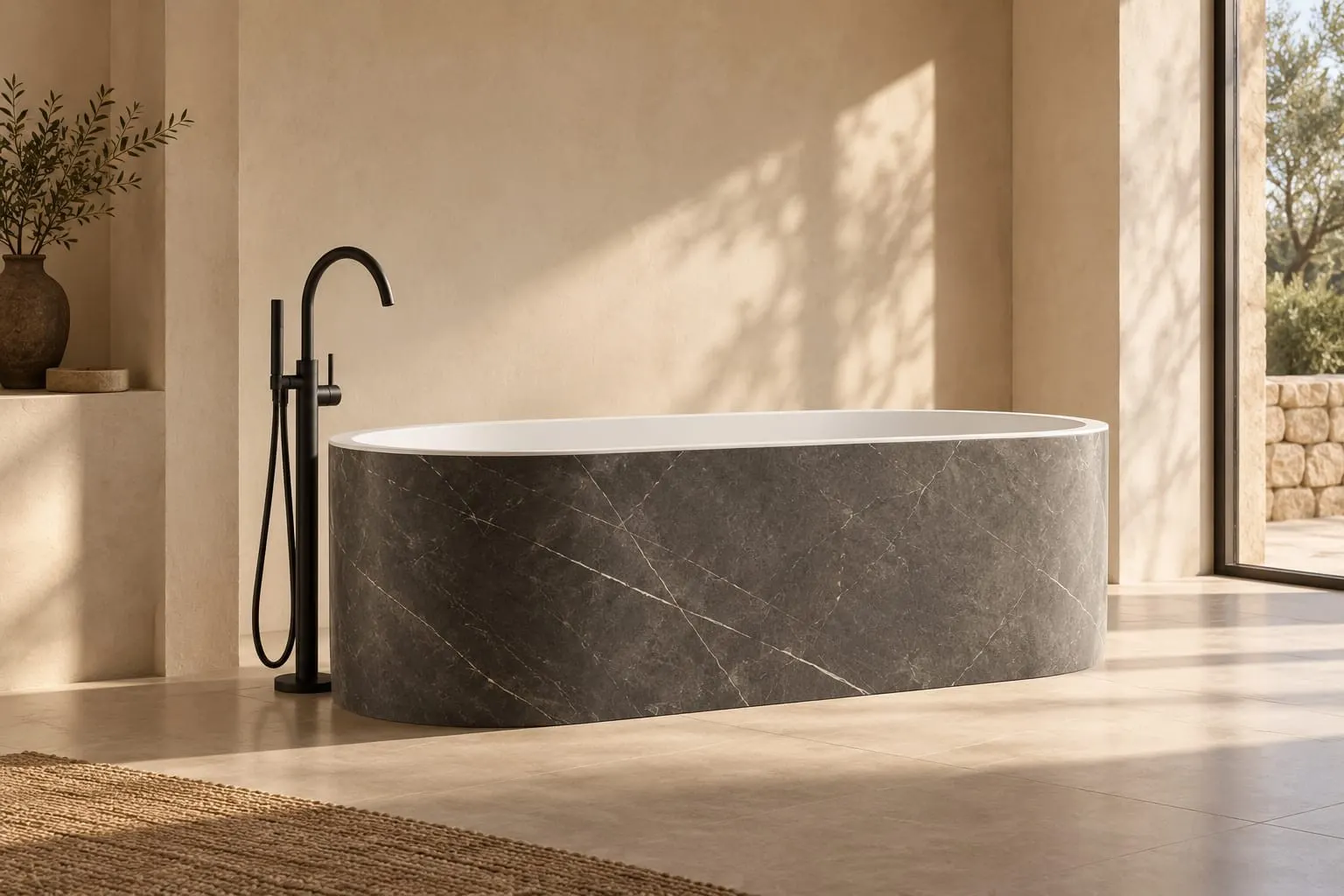
Bathrooms
Tubs, vanities and basins clad in natural stone.
-
 1 mm
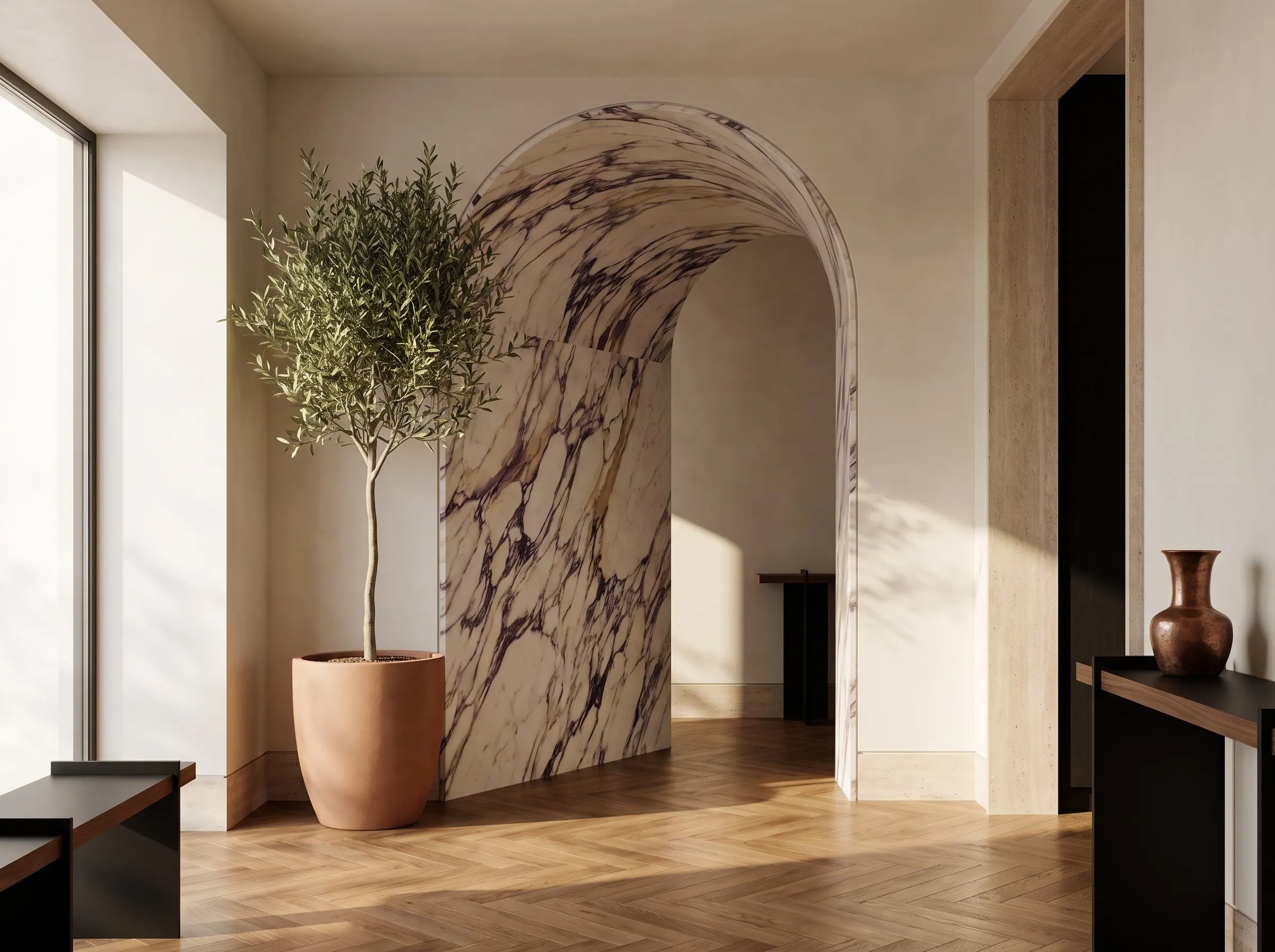
Architectural elements
Arches and columns clad in one continuous curve.
-
 1 & 5 mm
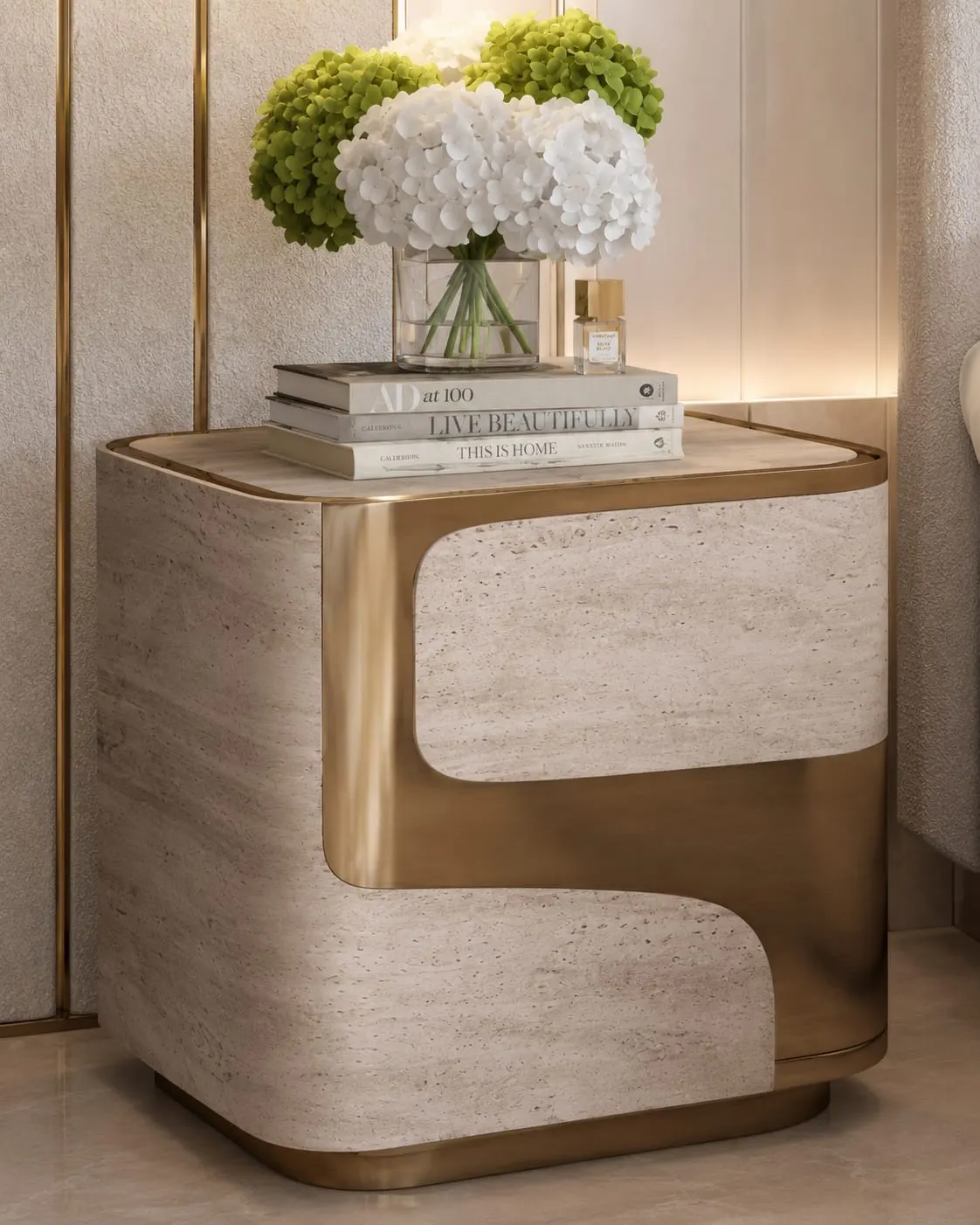
Custom furniture
Stone fronts that truly open and close.
-
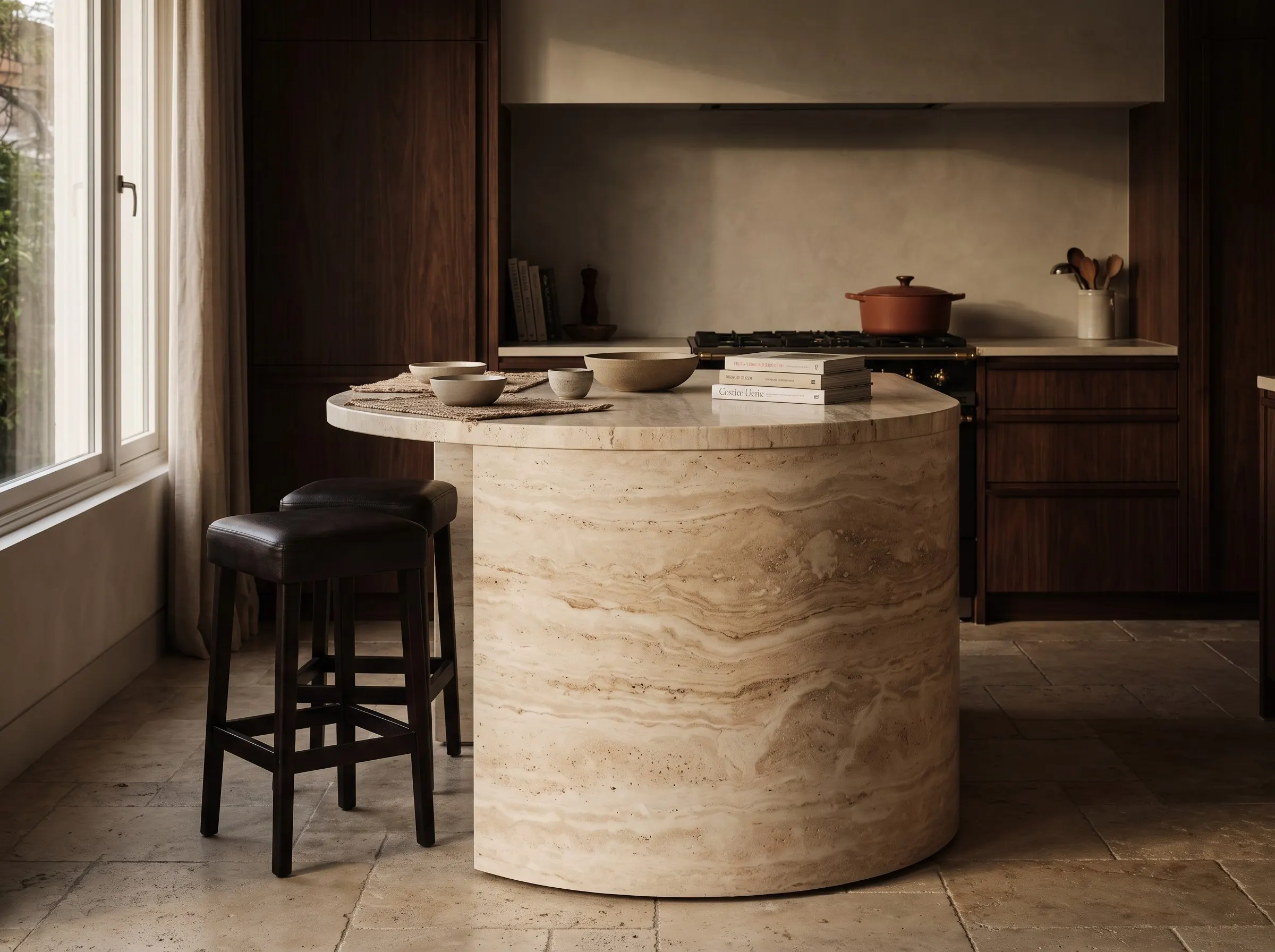 1 mm
Curved surfaces
A real curve, not segments faking one.
-
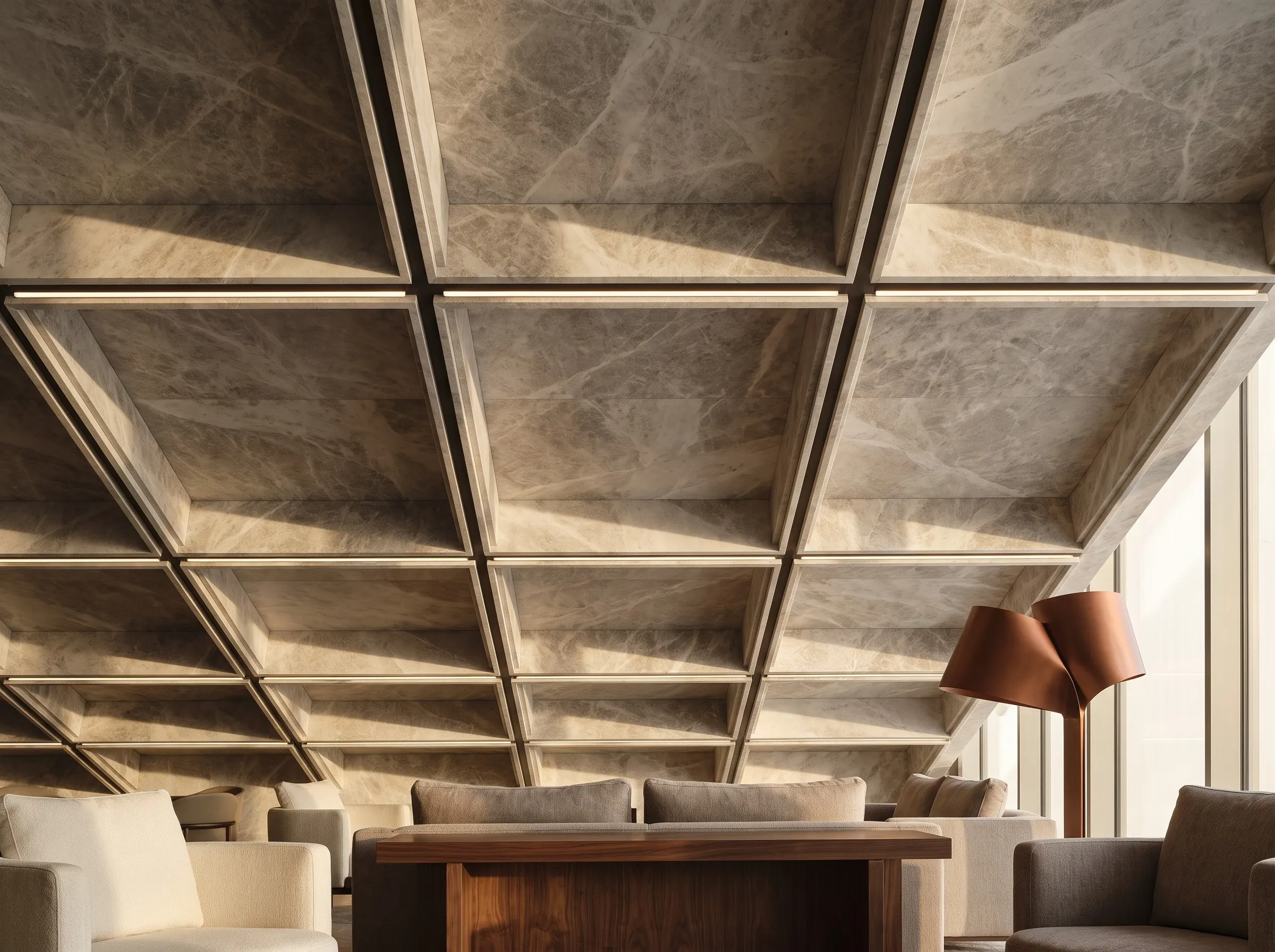 5 mm
Ceilings
Viable only at 3–4 lb/ft², not 13–15.
-
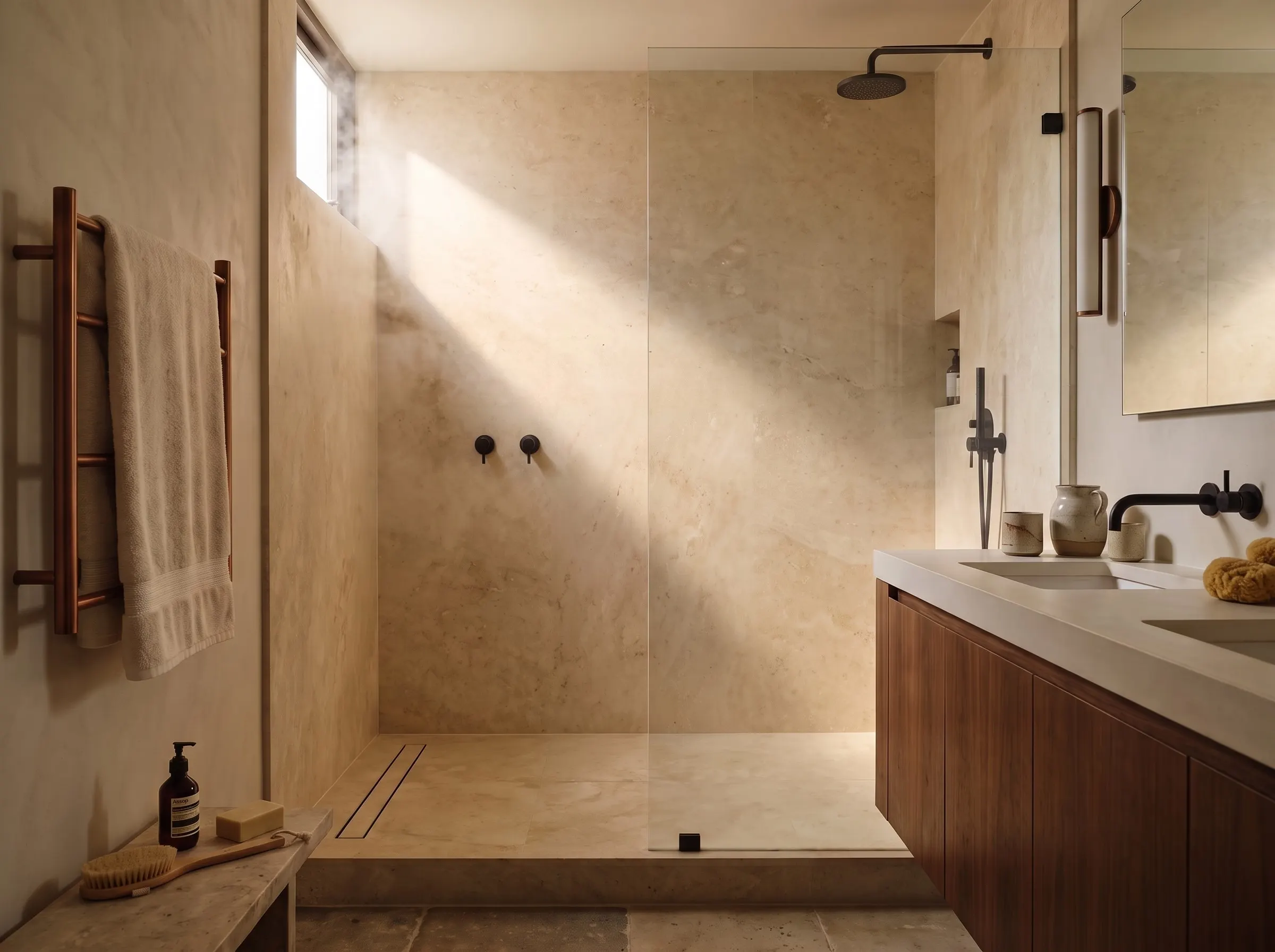 5 mm
Walk-in showers
Fewer joints: less seepage, less silicone.
Your application is not on the list?
It is probably still possible. The limit is set by the construction detail, and we review that with you before there is a quote.
See applications in detailWeight
The structure stops being the limit.
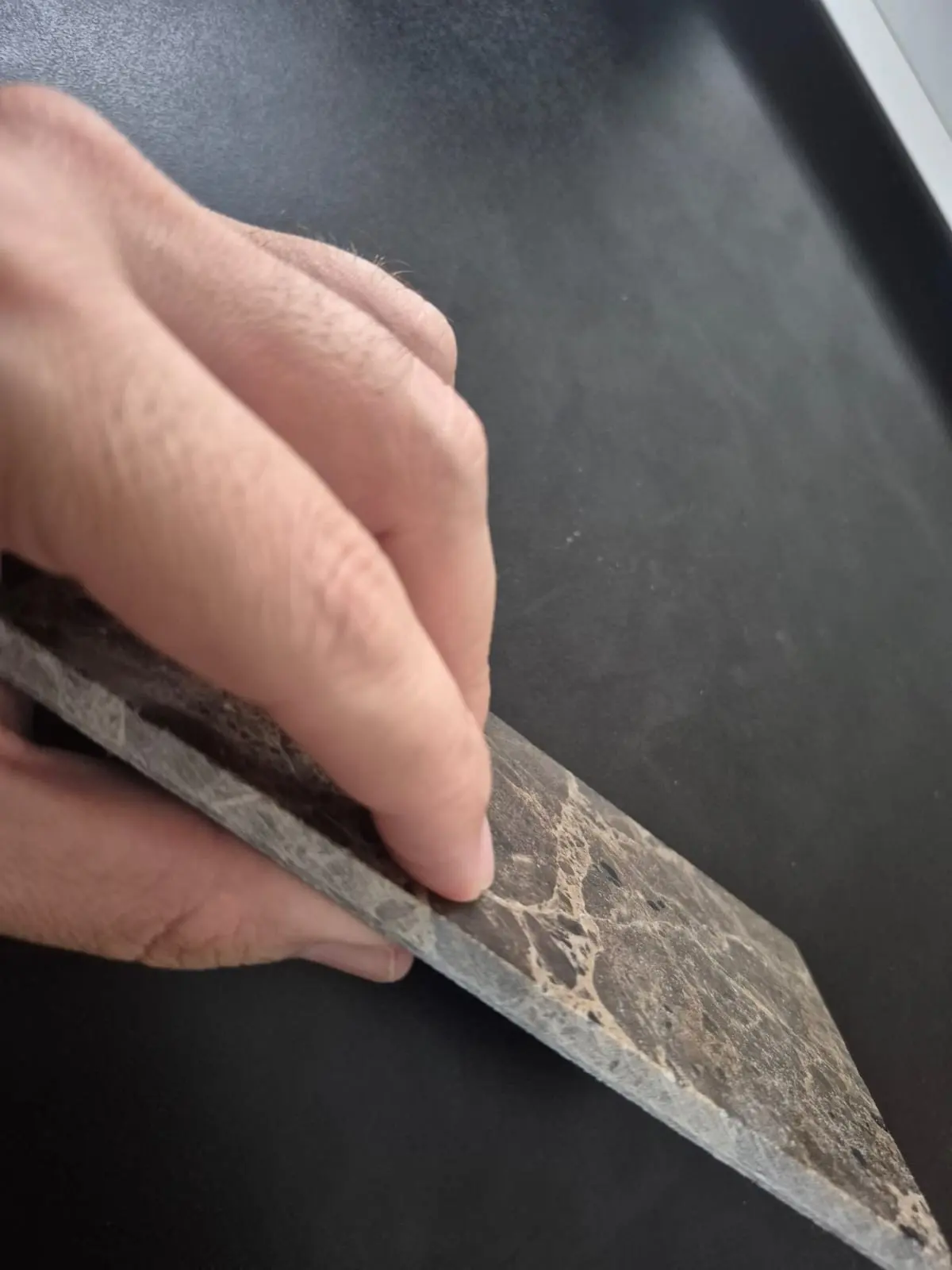
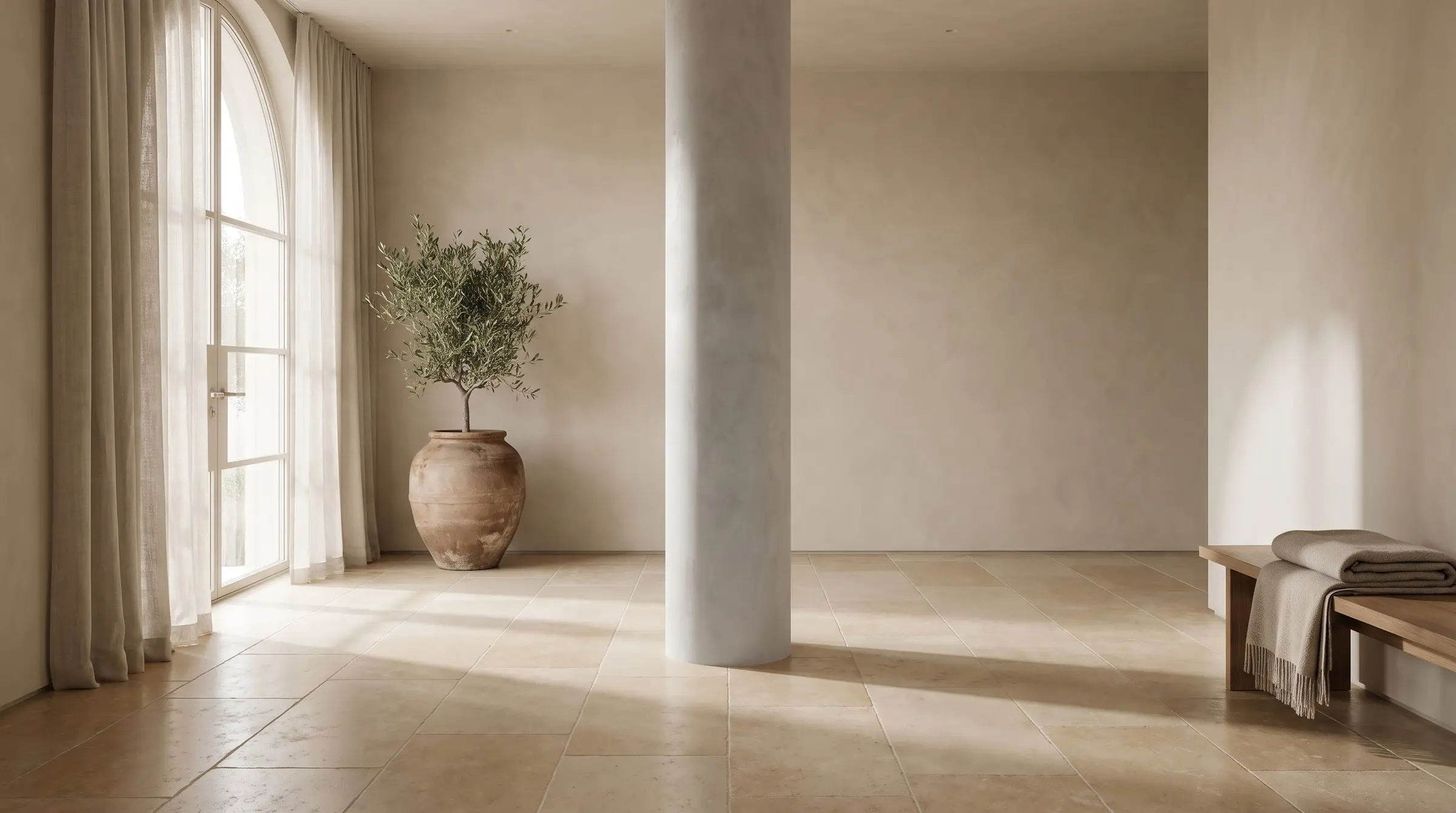
A square meter of 3/4 in marble weighs about as much as a small adult. The same square meter of 1 mm MILLIMETER weighs less than a laptop.
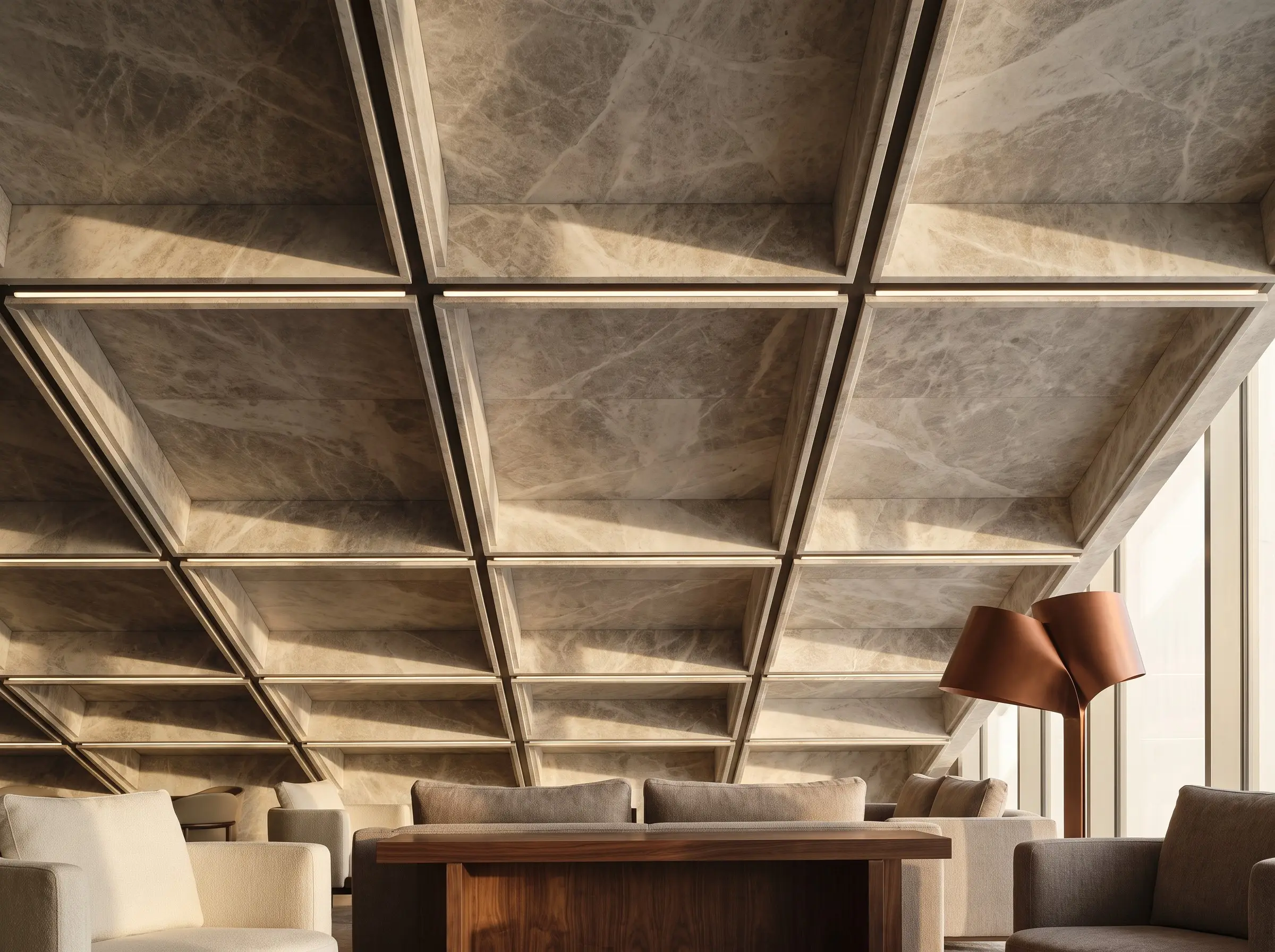
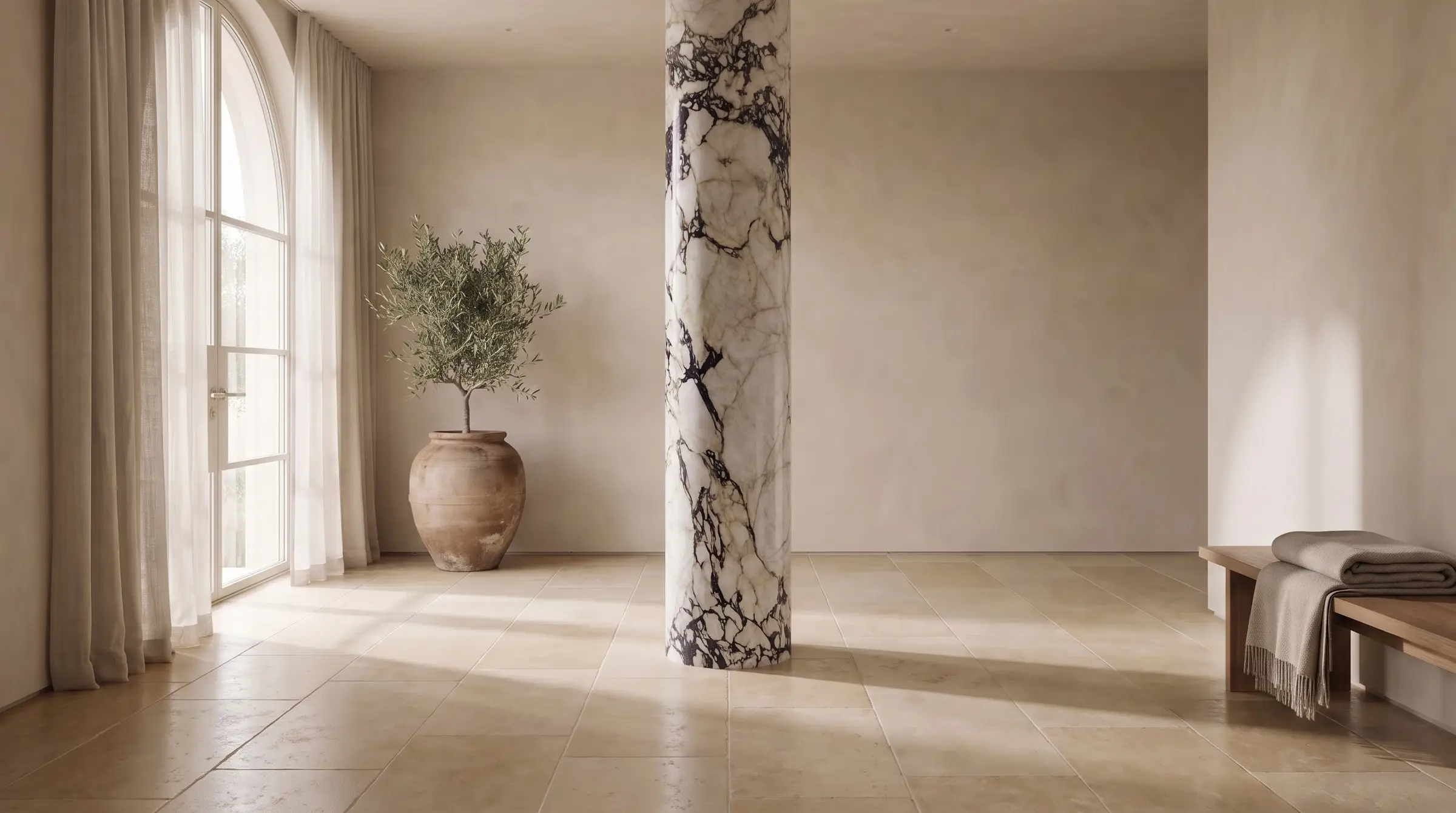
Emperor Light Marble
Curvature
A real curve, not a cut.
- An arch or column clad in traditional stone is a sequence of flat pieces with joints the eye picks up.
- At 1 millimeter the stone follows the surface: the curve is continuous and the veining runs straight through it.
- That is the difference between a detail a client forgives and a detail a client remembers.
- 1 mm
- tight curves, columns, arches, cabinet fronts
- 5 mm
- demanding flat surfaces: countertops, integrated sinks
The exact minimum radius depends on the material and the piece. It is confirmed during the project study, before anything is produced.
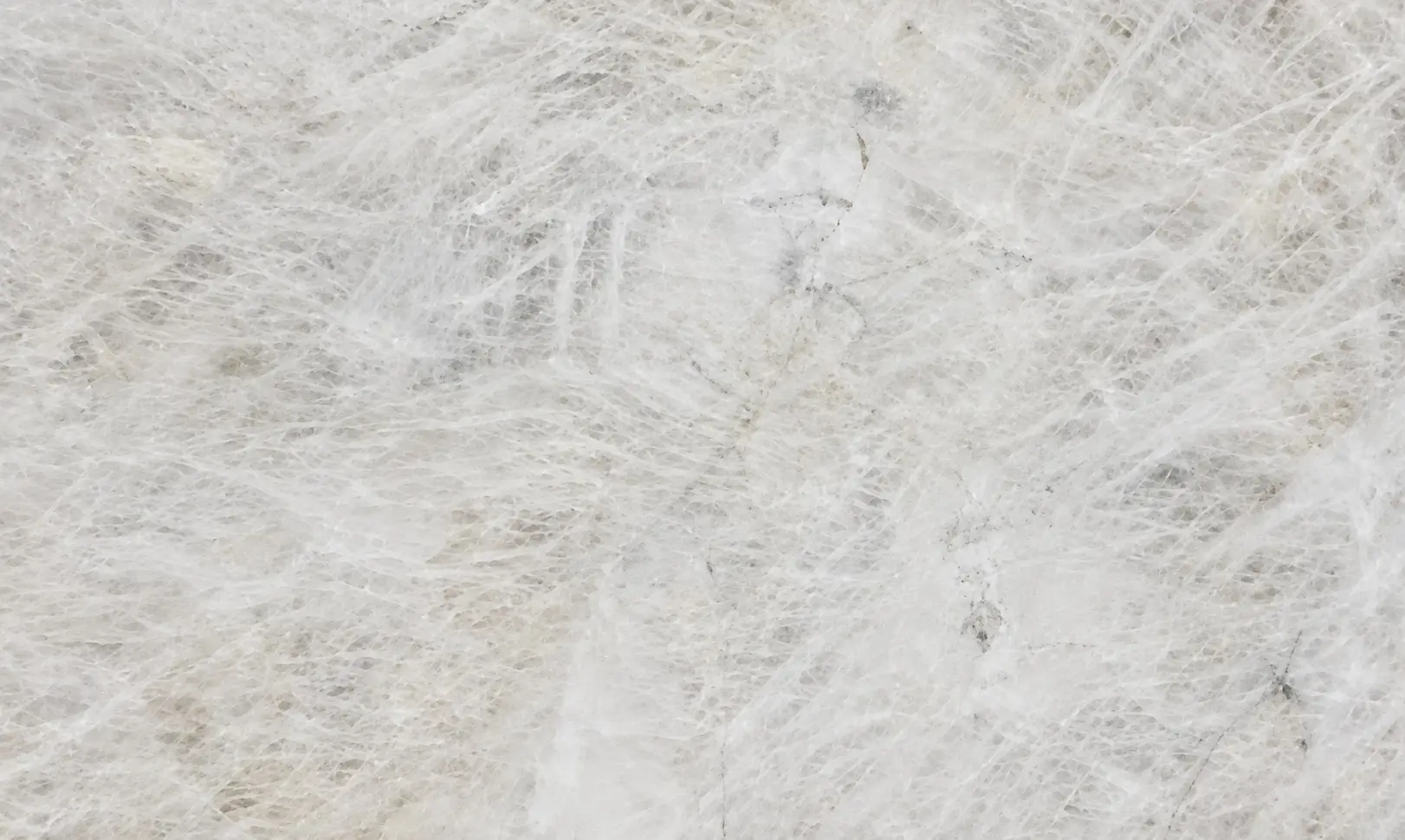
Stone library
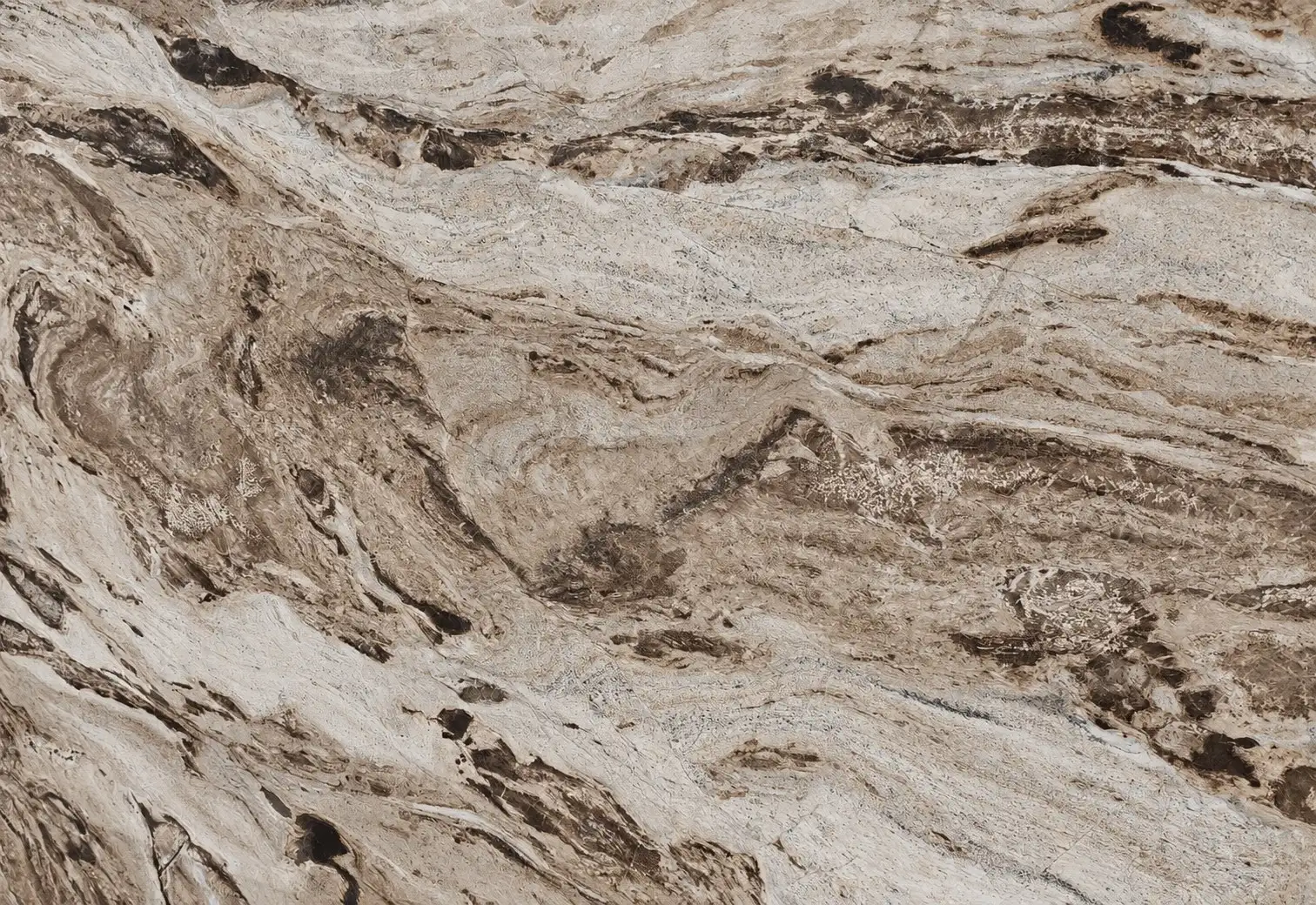
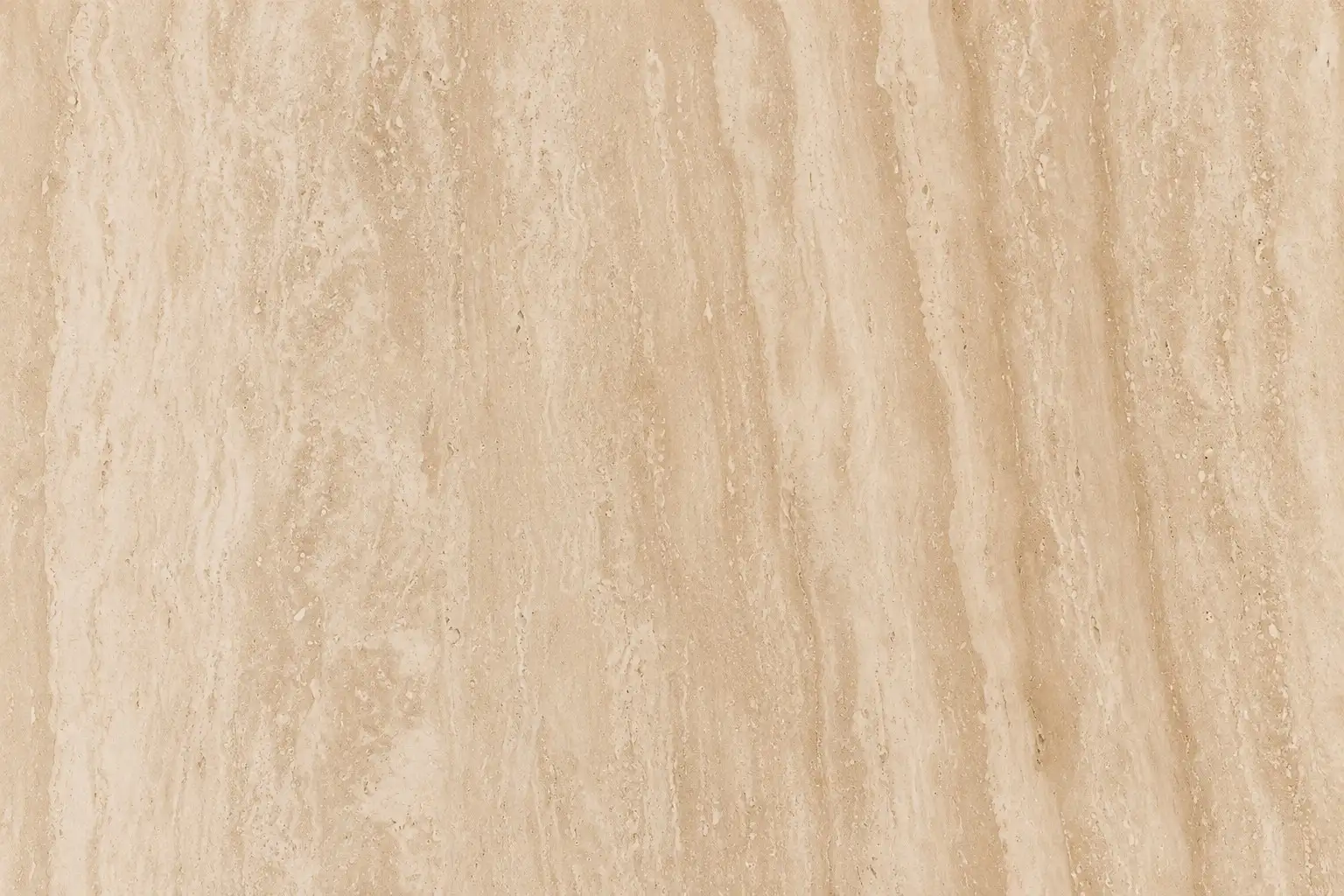
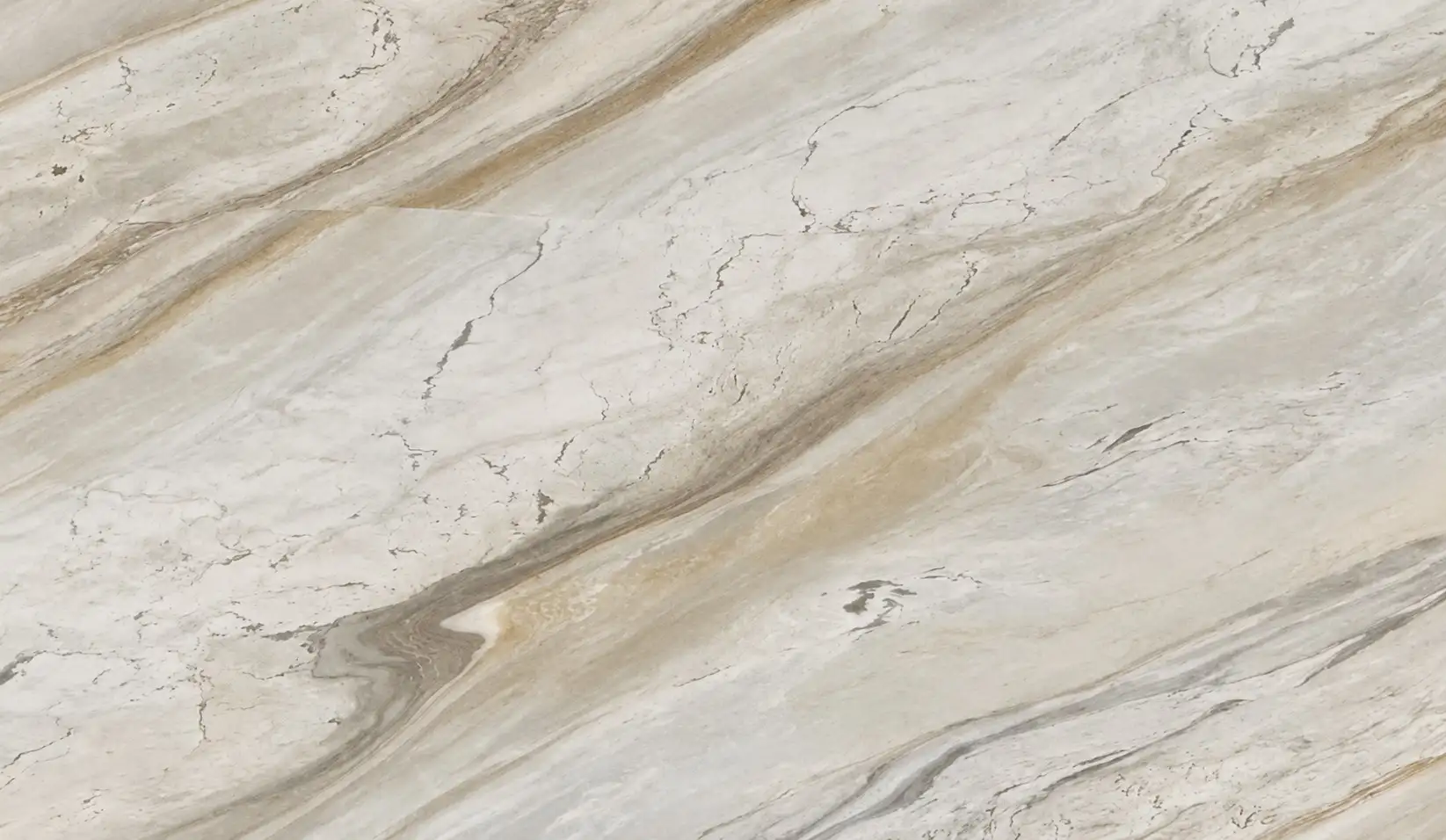
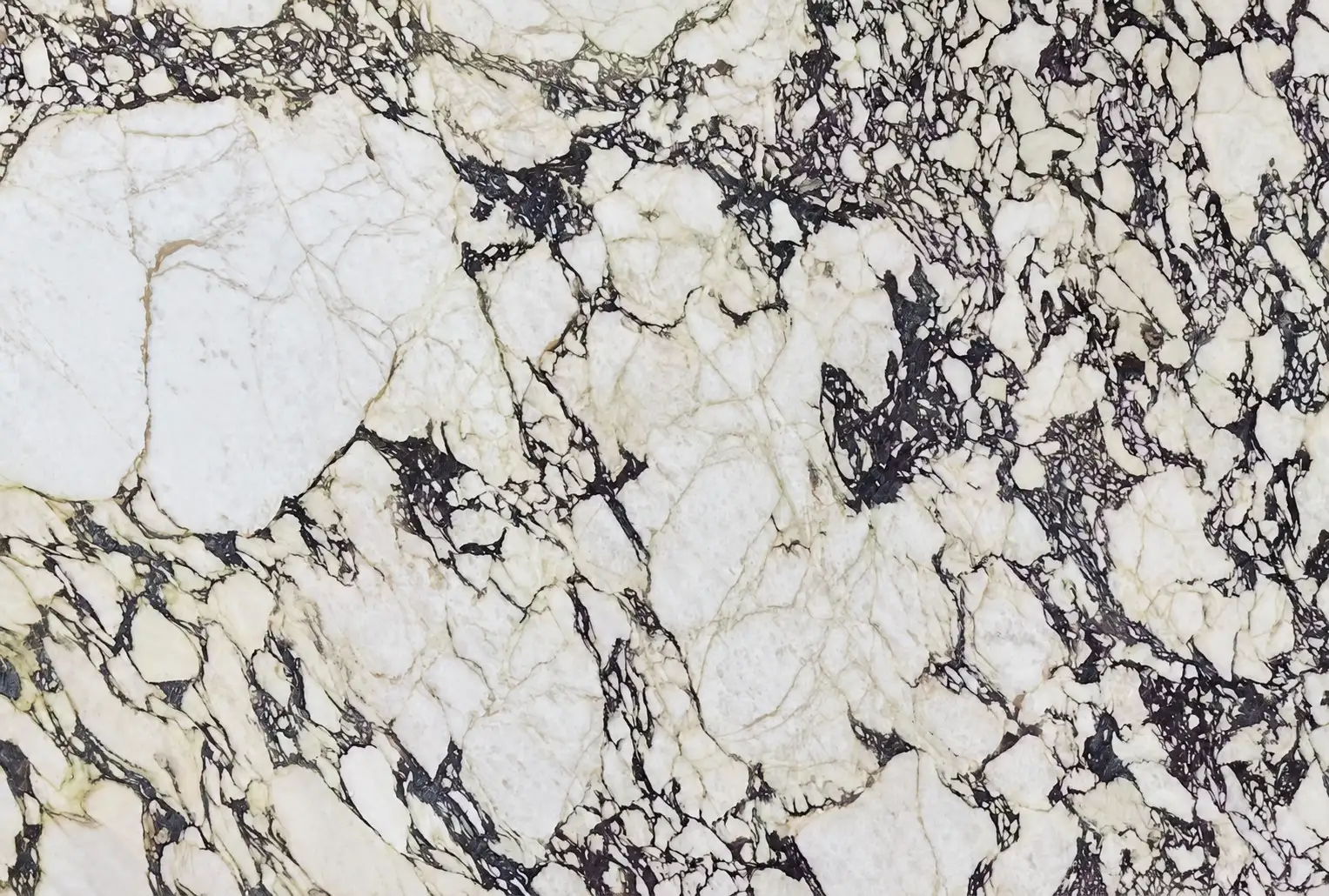
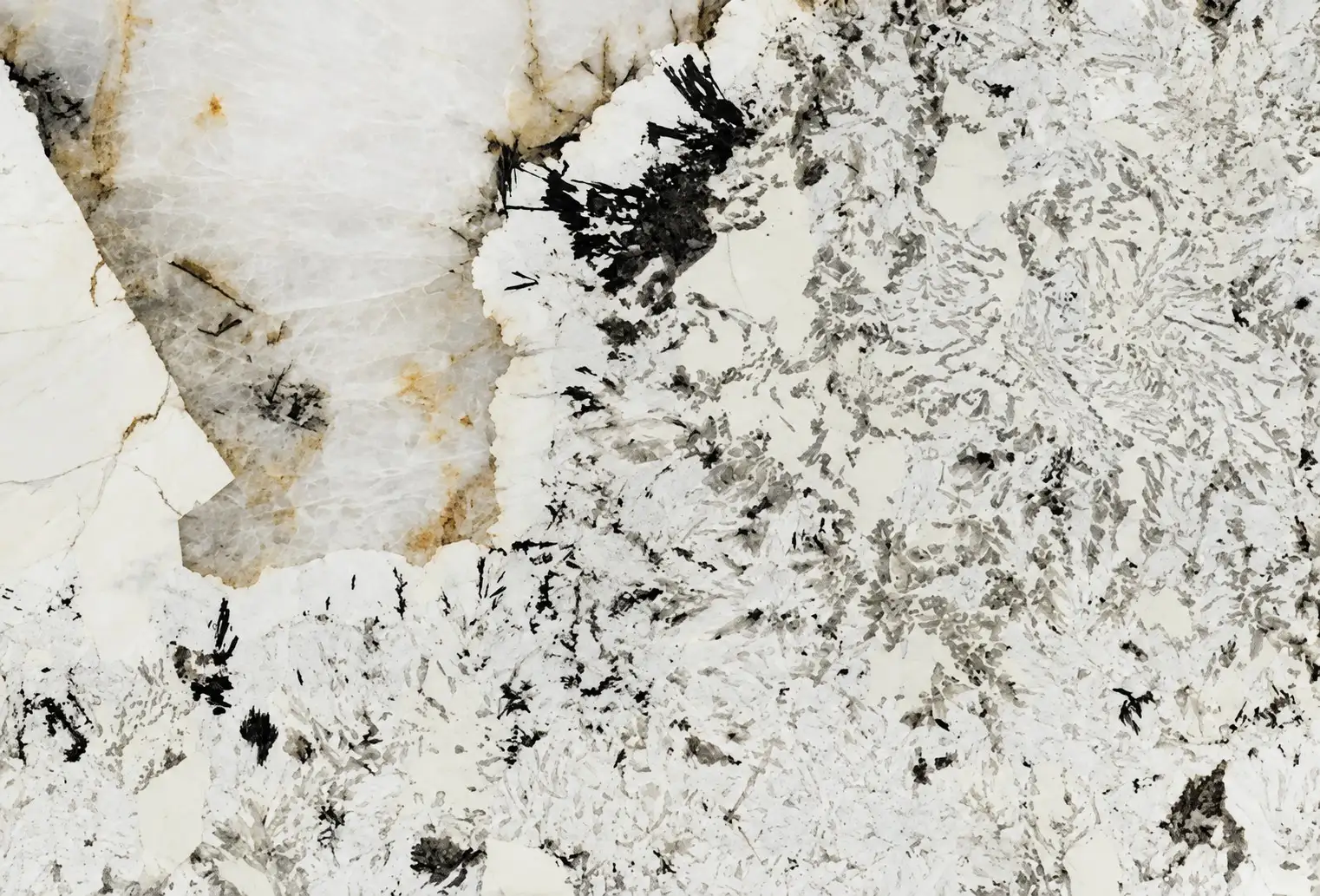
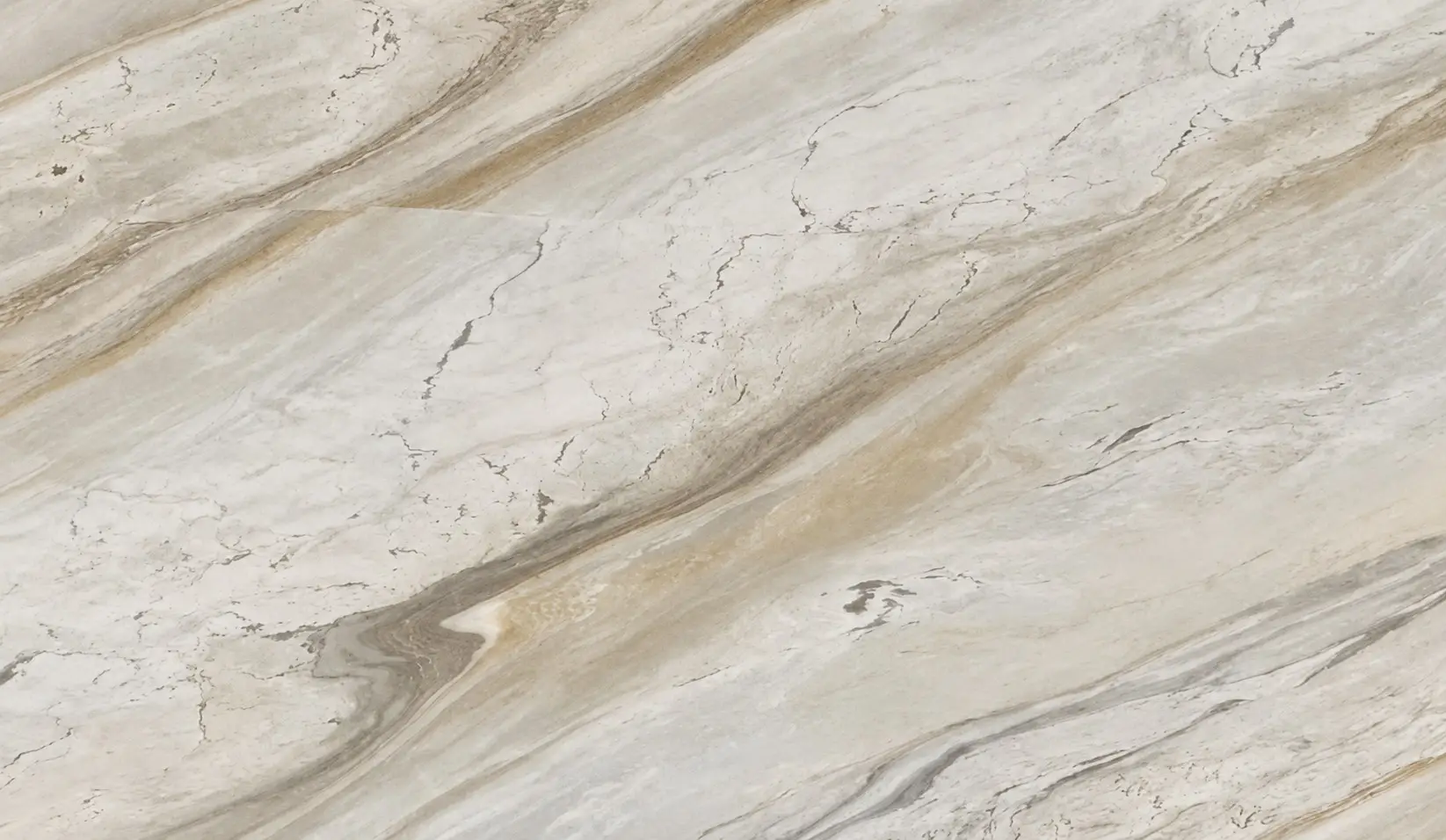
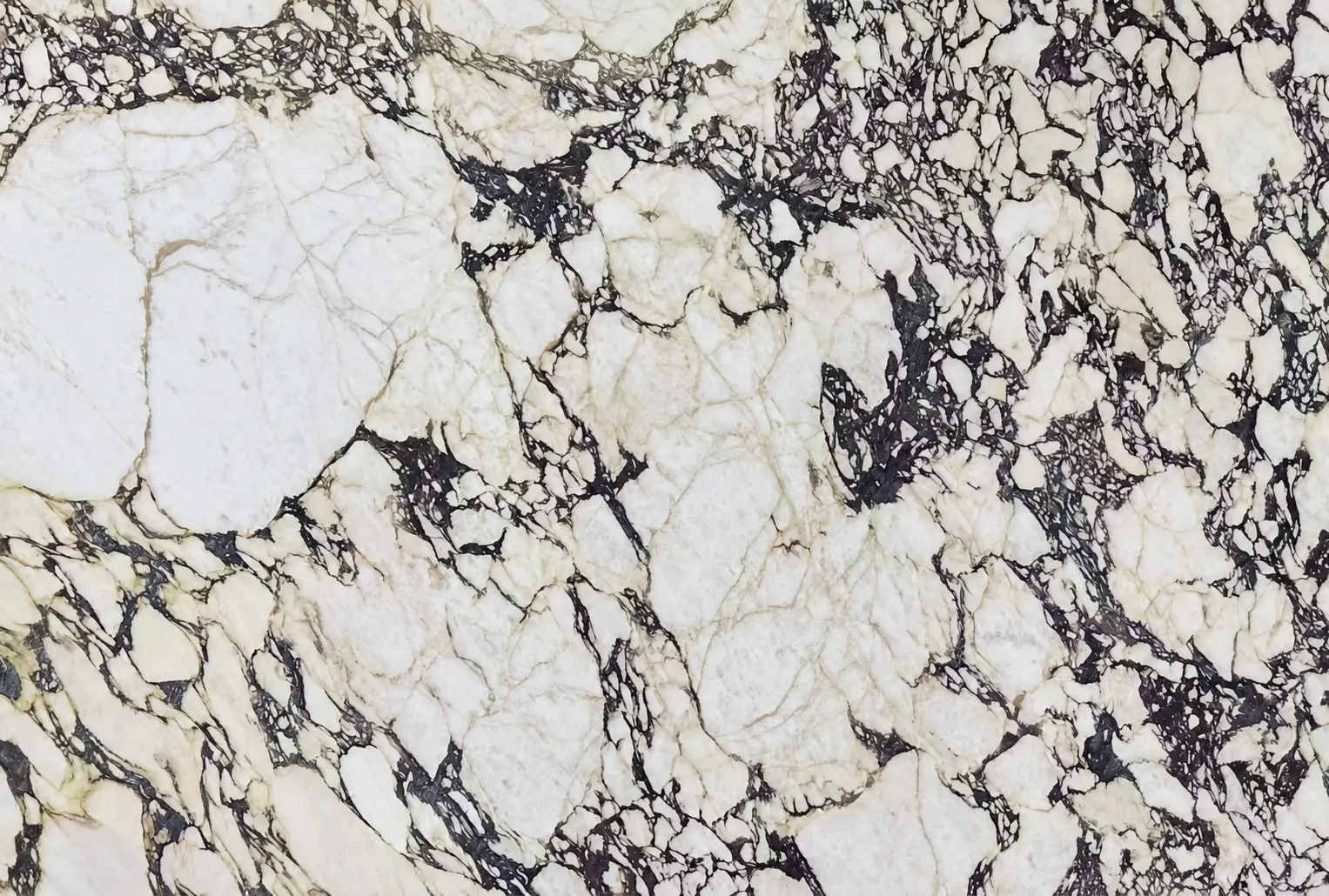
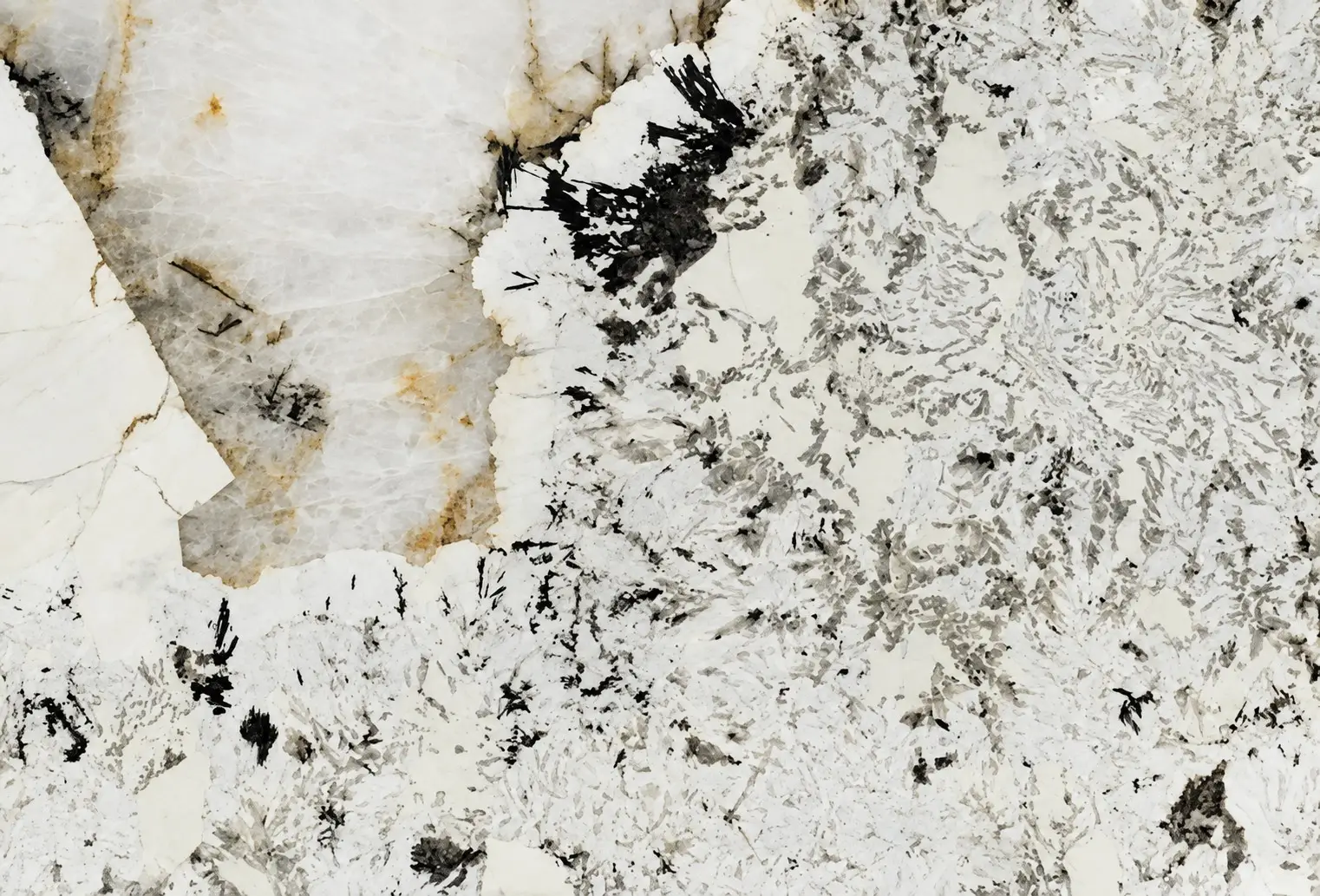
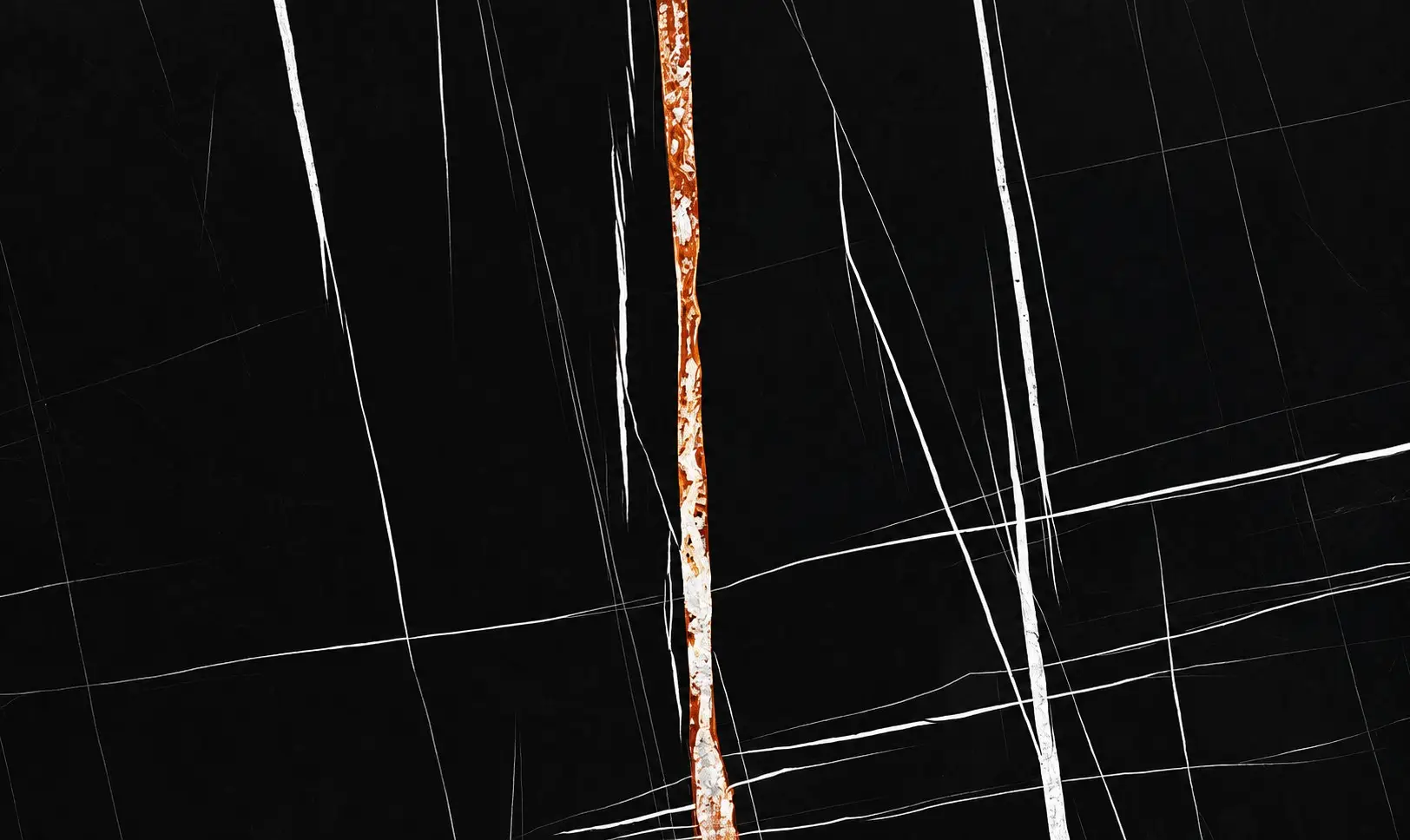
The same stone. Without the thickness.
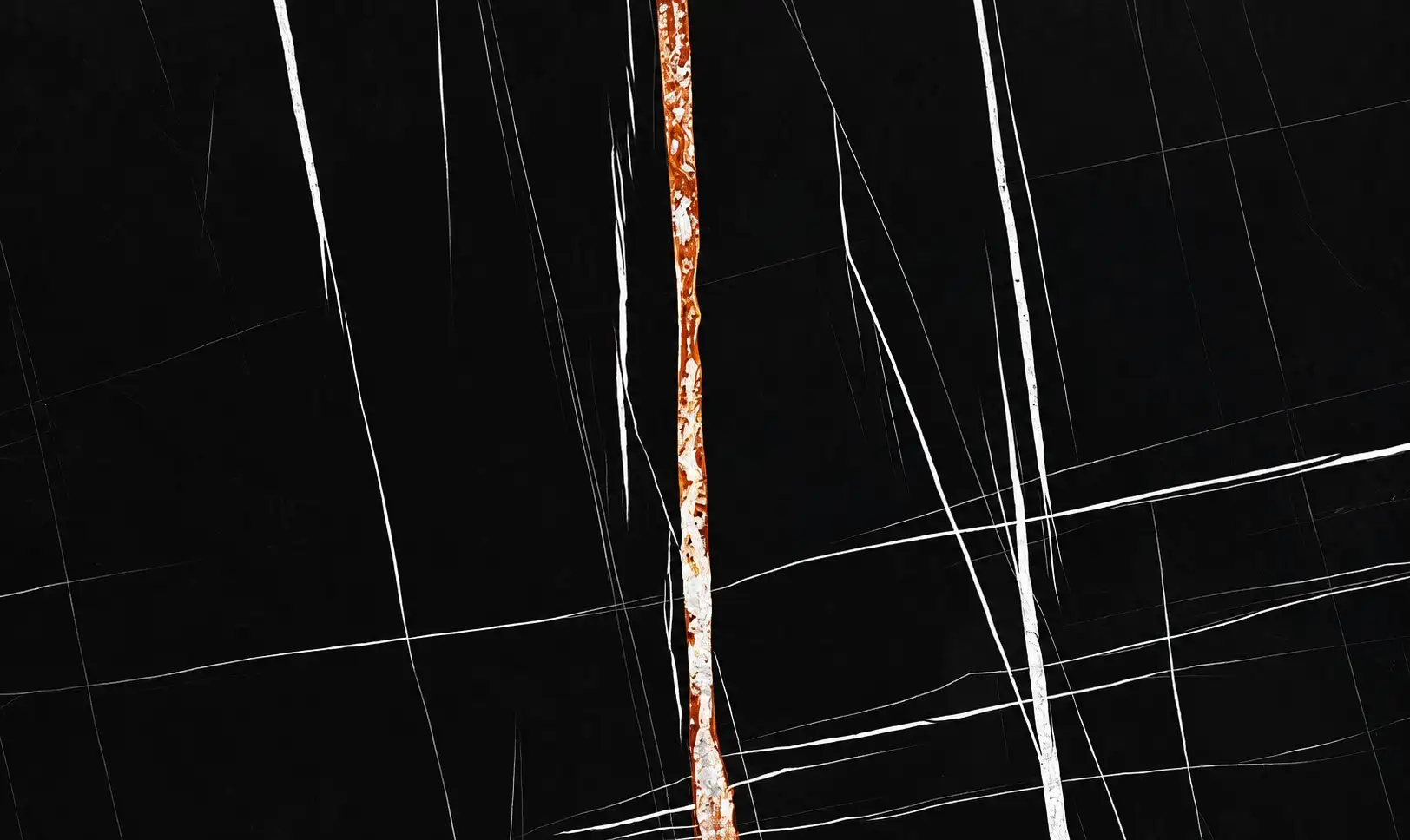
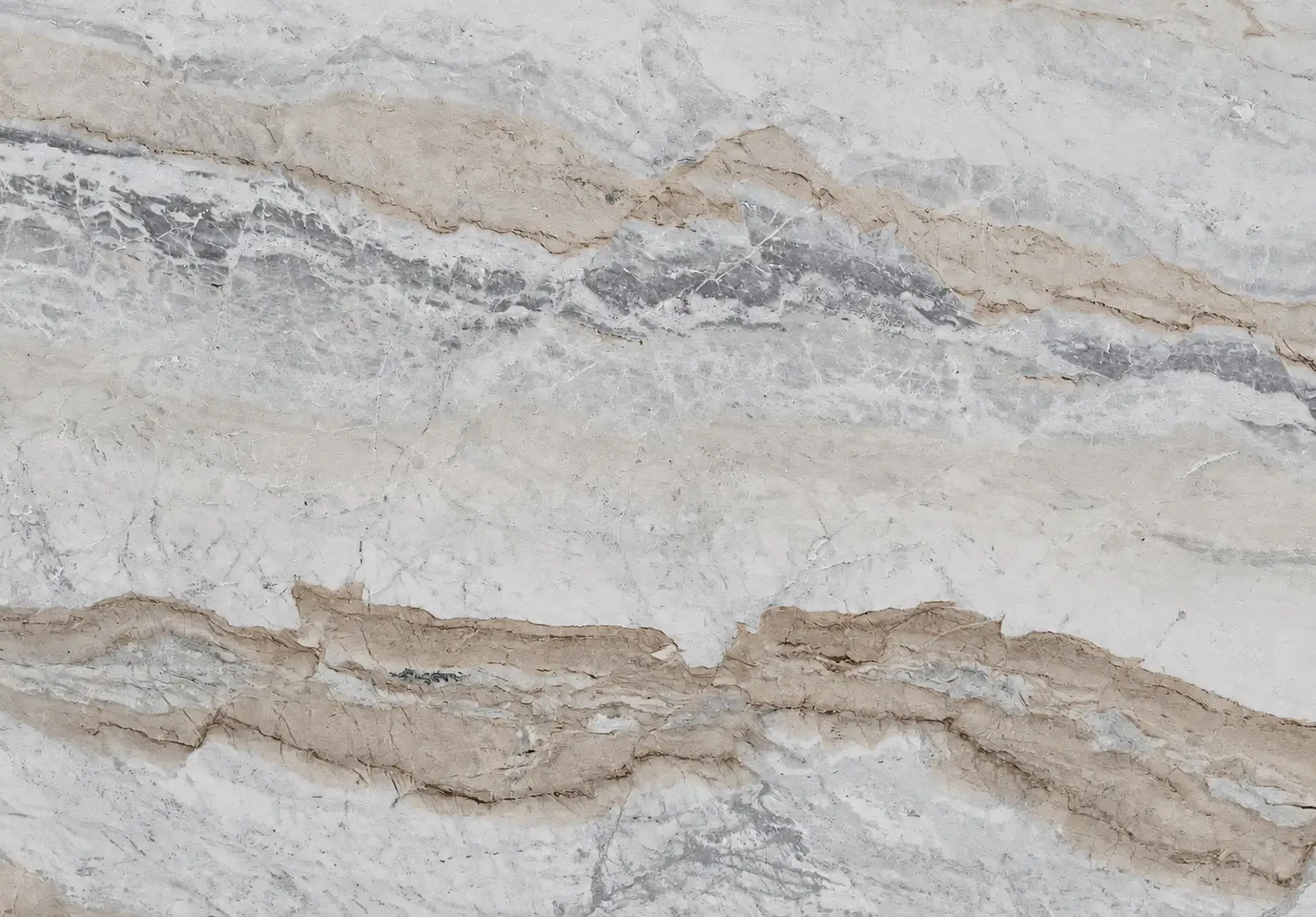
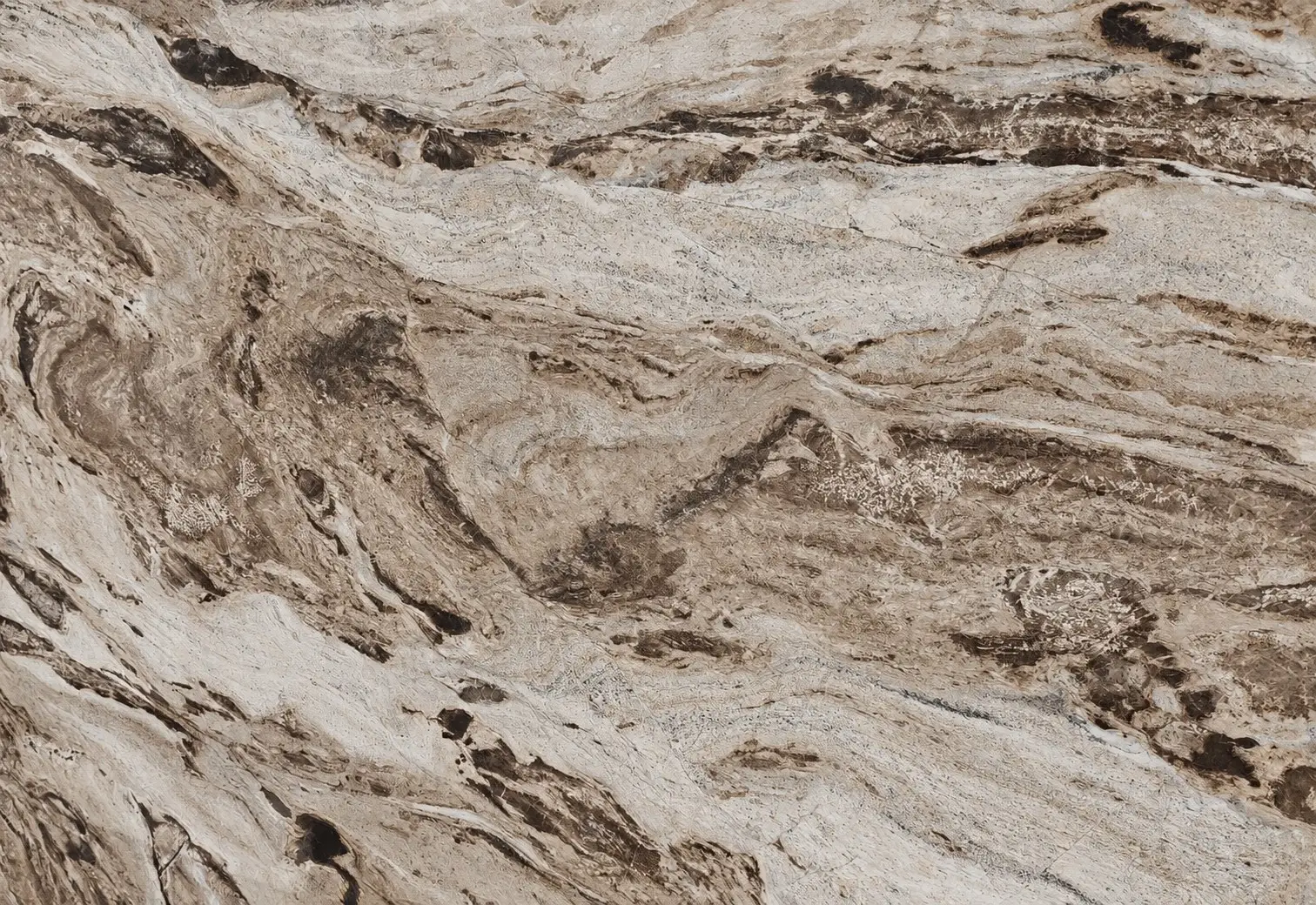
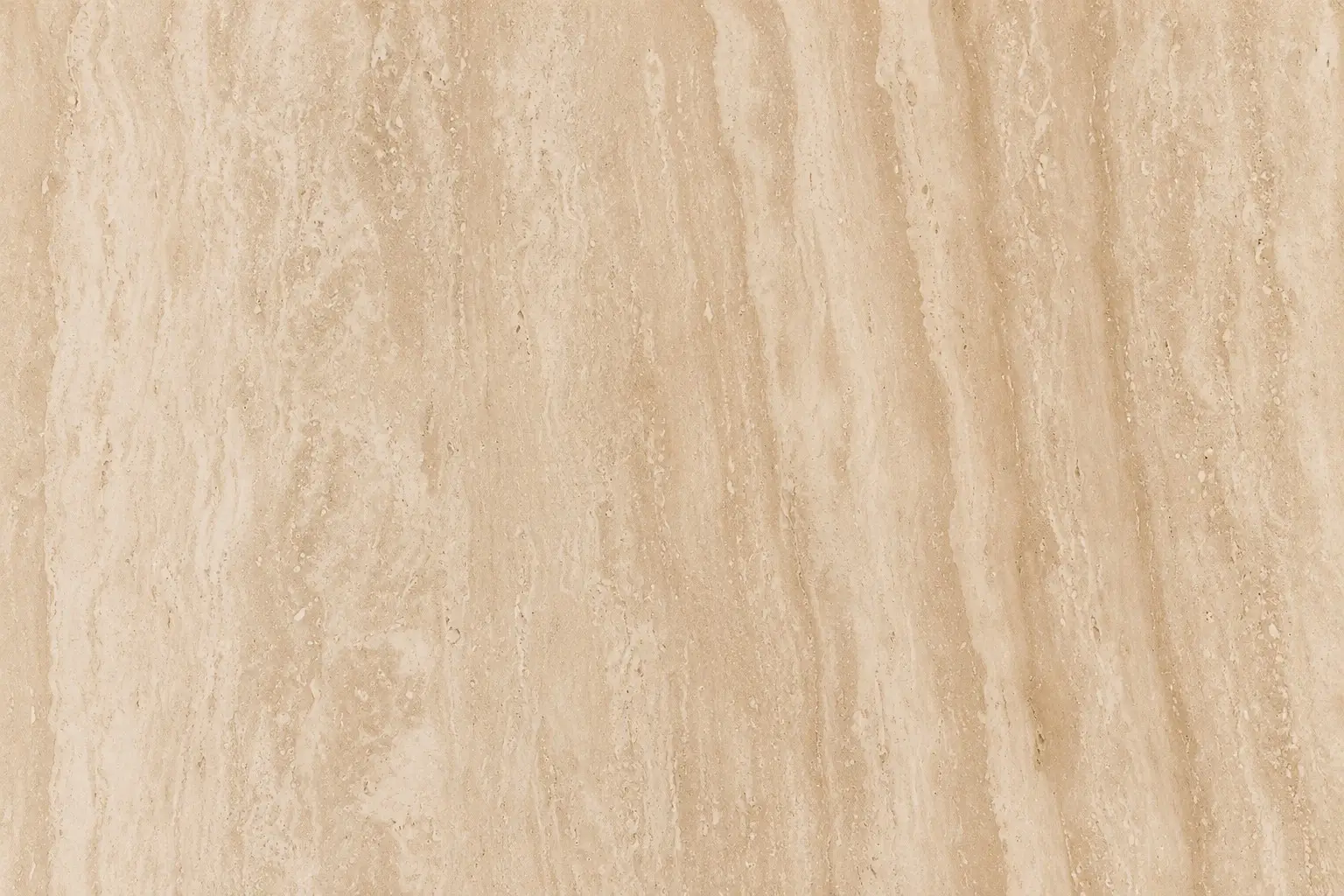
Marbles, quartzites and travertines with their veining intact. What changes is the thickness, not the material.
See all materials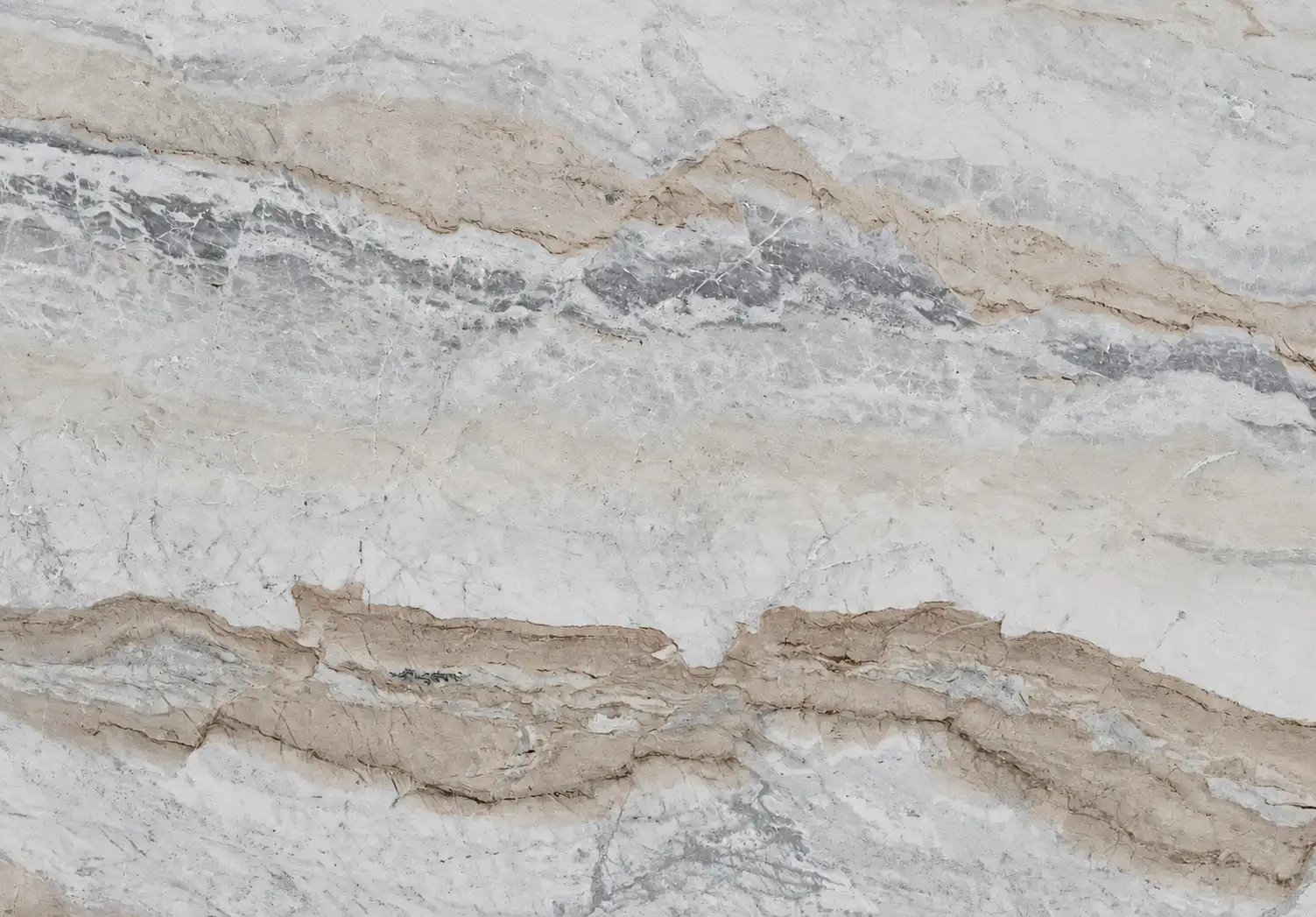

Health & safety
Silica depends on the stone. Choose it knowingly.
Crystalline silica is why engineered quartz is linked to silicosis in the people who cut and install it. Natural stone is not automatically silica-free: the content depends on the rock. Marble and travertine contain little or none; granite and quartzite contain much more. We specify each stone with that in mind.
Typical crystalline silica content, by stone type
- Marble & travertine Crystalline silica: < 5%
- Granite Crystalline silica: 10–50%
- Quartzite Crystalline silica: ≥ 95%
- Engineered stone (quartz surfaces) Crystalline silica: < 0.2–95%
-
Low-silica stones
Marble and travertine contain little or no crystalline silica: under 5%.
-
Less material per cut
A cut through 1 mm removes one twentieth of the material of a 2 cm slab; through 5 mm, a quarter.
-
Less work on site
Pieces are prepared to the project drawings to keep cutting on site to a minimum.
-
Controls still apply
With any stone, wet cutting, dust extraction and respiratory protection remain essential.
Typical values: every variety differs and is confirmed with its technical data. Source: OSHA–NIOSH Hazard Alert, “Worker Exposure to Silica during Countertop Manufacturing, Finishing, and Installation” (2026). Source (PDF)
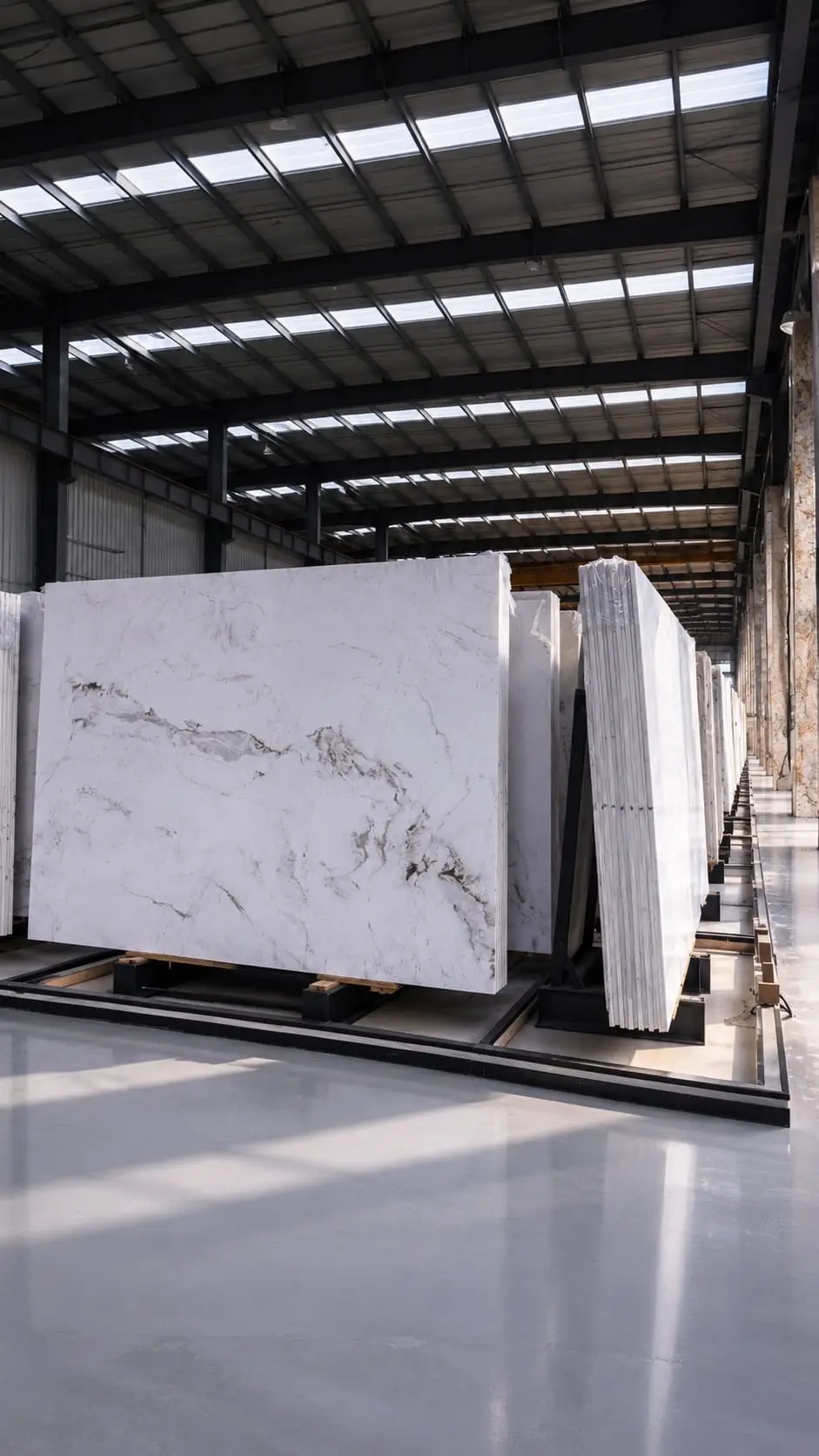
Carbon footprint
Less thickness, less footprint.
With 1 to 5 millimeters instead of 2 or 3 centimeters, every square foot weighs up to 90% less. We are mindful of our carbon footprint — and it starts with thickness.
- Transport
- Up to 90% less weight per square foot: lighter shipments and less energy to move them.
- Packaging
- Thinner, lighter pieces need less packaging material and take up less freight volume.
- Lifting & handling
- Less weight calls for lighter lifting equipment and anchors, in the shop and on site.
- Material per square foot
- One millimeter of stone covers what used to require two centimeters.
Projects
Real projects. Real precision.
We collaborate with architects, designers and private clients, delivering bespoke solutions for high-end residential and commercial projects. These are built pieces, with their full specification.
From the quarry to the project
Stone selected at its source, fabricated in our workshops and delivered wherever our clients build.
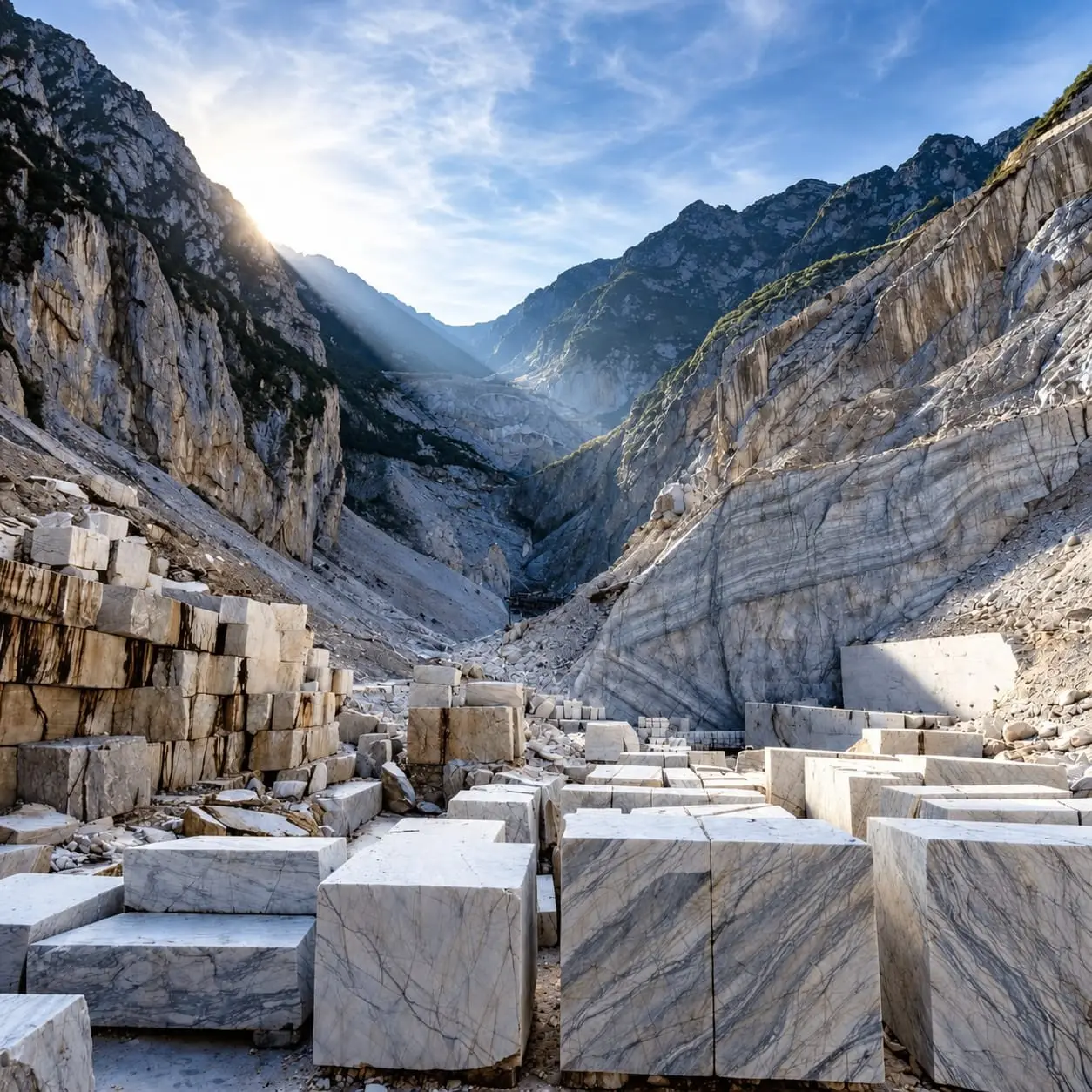
Quarries · stone origin
- Italy Bianco Carrara · Verde Alpi · Cream Travertin Roman
- Spain Nero Marquina · Rojo Levante
- Portugal Dark Rosa Portugués
- Brazil Taj Mahal · Patagonia
- Iran Pietra Grey
- Tunisia Sahara Noir
- China
- India
- Peru
Fabrication
- Houston · United States
- Spain
Commercial presence
- United States · Houston · headquarters
- Spain
- United Arab Emirates
- Colombia
Destinations
- Los Angeles
- Monterrey
- Miami
- Santo Domingo
- Paris
- Netherlands
- Dubai
Quarry → workshop
Workshop → destination
Quarries mark the countries of origin of the stone. Lines show how stone travels from its origin to our workshops and on to each destination.
-
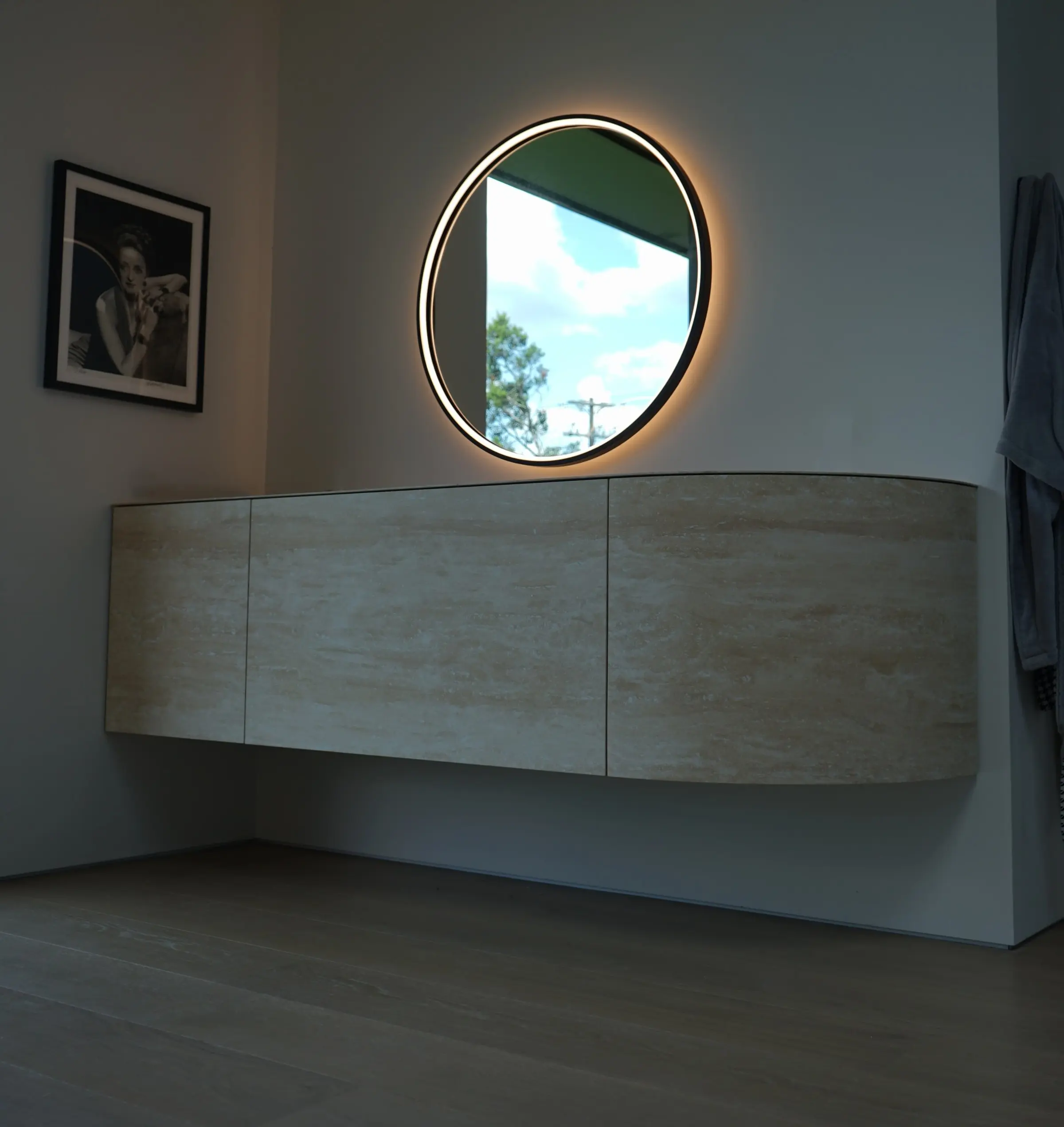
Austin, TX
Wittman Residence
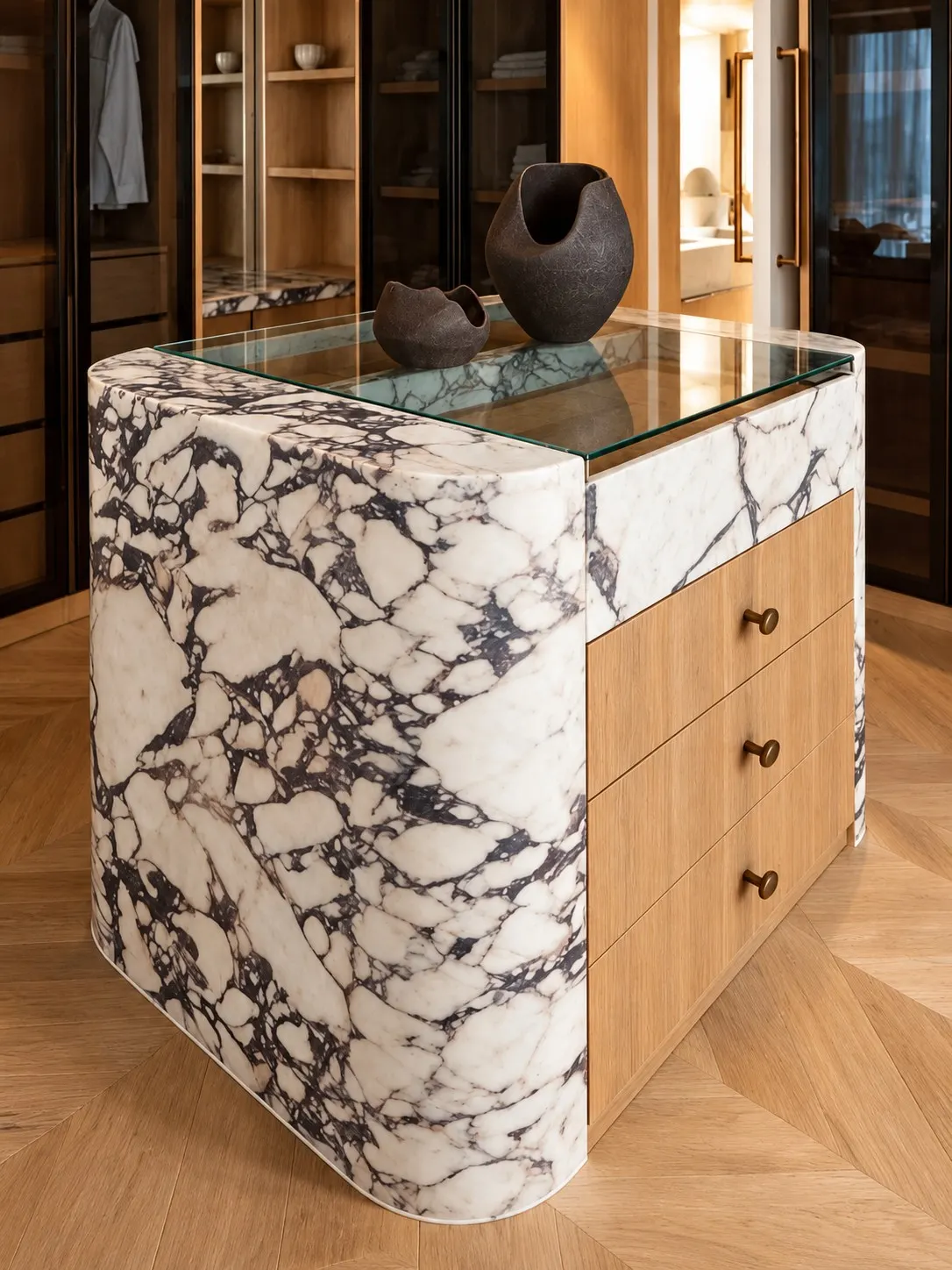
Curved floating vanity
- Material
- Cream Travertine
- Thickness
- 1 mm + 5 mm
-
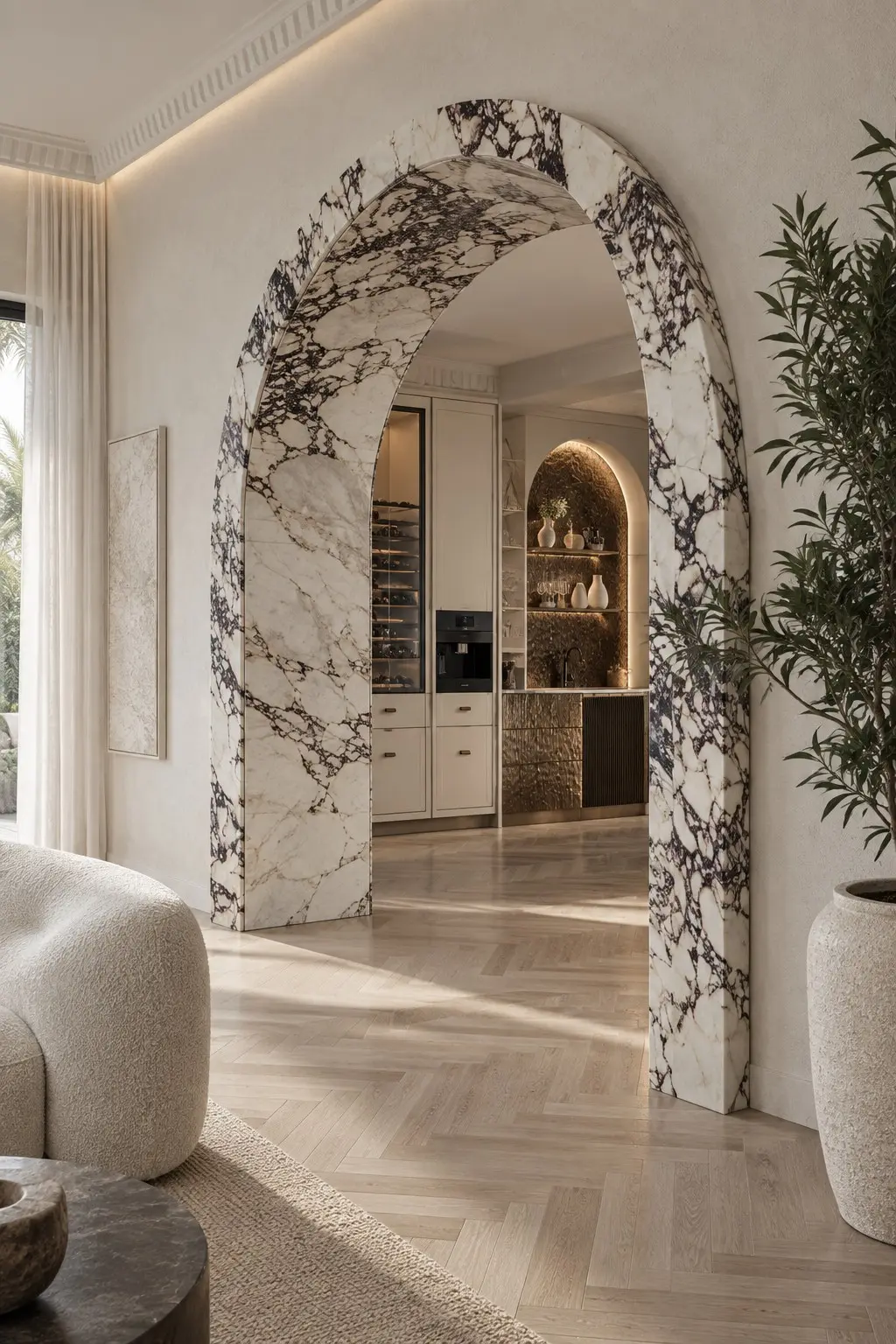
San Diego, CA
Barret Project
Arch in continuous curved cladding
- Material
- Calacatta Viola
- Thickness
- 1 mm + 2 cm
-
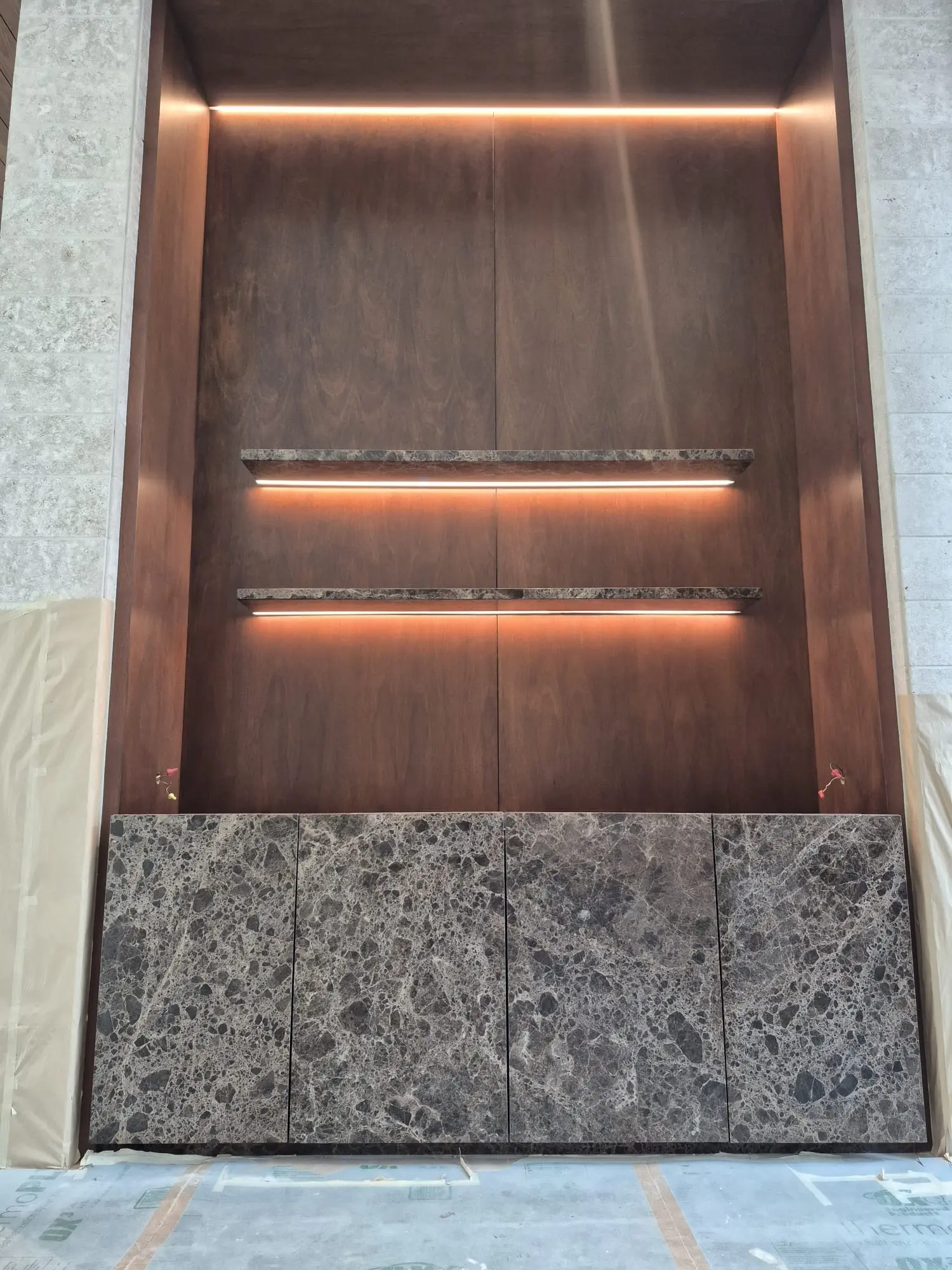
Houston, TX
Altuve Residence
Built-in bar cabinet in Dark Emperador
- Material
- Dark Emperador
- Thickness
- 5 mm
Casanova
A Legacy Shaped in Stone
90+years working with natural stone
Casanova represents more than 90 years and three generations of experience working with natural stone. What began as a family tradition in Spain has evolved into a design-driven company based in Houston, combining inherited craftsmanship with contemporary technology.
Led by CEO Jesús Casanova, the company approaches every project with a deep understanding of the material, from selecting stone at its source to developing, fabricating and installing custom architectural solutions.
Meet Jesús Casanova- Spain A family tradition in natural stone begins.
- Three generations Craftsmanship inherited and refined at the source of the stone.
- Houston, Texas A design-driven company combining that craft with contemporary technology.
- MILLIMETER Real stone at 1 mm and 5 mm, for forms that were never possible.

Your point of contact
Jesús Casanova
Founder, Owner and CEO of MILLIMETER
“A specification material deserves a person, not a catalog.”
Creator and driving vision behind MILLIMETER, Jesús represents the third generation of a family dedicated to natural stone for more than 80 years.
His experience combines traditional craftsmanship with the technical development of natural stone in 1 mm and 5 mm thicknesses, opening new possibilities for curved walls, doors, furniture and custom architectural applications.
He personally guides each project from material selection and technical evaluation through fabrication and installation, ensuring that every solution respects both the design intent and the natural character of the stone.
● Reply within one business day
How we work
From the idea to the installed piece.
- 01
You send the project
Plans, elevations, references or a photo of a sketch. Whatever you have.
- 02
Technical study
We define whether the material solves the piece, at what thickness and on what substrate. Everything is decided here.
- 03
Material and quote
Stone selected from real samples, cutting plan and a closed quote.
- 04
Production and installation
Custom fabrication and on-site support until the piece is in place.
If MILLIMETER is not the right material for your project, we will tell you. It is cheaper for everyone to find out on the drawing than on site.
Questions
What architects ask first.
What is MILLIMETER?
Real natural stone — marble, quartzite, travertine and granite — processed with a proprietary system down to a thickness of 1 to 5 millimeters. It is not a composite, a print or an imitation: it is the same stone, without the thickness.
How much does thin natural stone weigh?
MILLIMETER at 1 mm weighs under 1 lb/ft² (under 5 kg/m²) and at 5 mm about 3–4 lb/ft² (15–20 kg/m²). Traditional 3/4 in (2 cm) stone weighs 13–15 lb/ft² (63–73 kg/m²): between 73% and 93% more load on the structure.
Can natural stone really be curved?
Yes. At 1 mm the stone follows a curved surface in one continuous piece, so the veining runs through the curve without joints. Travertines and fine-veined marbles take tighter radii than quartzites; the exact minimum radius is confirmed during the project study.
Which thickness should I specify: 1 mm or 5 mm?
1 mm for tight curves, columns, arches and cabinet fronts. 5 mm for demanding flat surfaces such as feature walls, showers, doors, ceilings, countertops and integrated sinks. Many projects combine both.
Is it safer than engineered quartz?
It depends on the stone you choose, and we will not generalise. According to OSHA and NIOSH, marble and limestones such as travertine typically contain less than 5% crystalline silica, granite 10–50%, quartzite 95% or more, and engineered stone anywhere from under 0.2% to 95%, with conventional quartz surfaces at the top of that range. A MILLIMETER piece in marble or travertine therefore involves far less silica than conventional engineered quartz, and at 1 or 5 mm every cut removes a fraction of the material of a 2–3 cm slab. Whatever the stone, wet cutting, dust extraction and suitable protective equipment remain essential, and we confirm the technical data of the specific stone for each project.
Why choose MILLIMETER and natural stone over other materials?
Because it is the real stone: veining and tones that never repeat, the visual depth only a natural material has, and finishes worked by craftsmen — polished, honed or brushed surfaces, profiled edges, mouldings and mitred corners. Instead of a surface that imitates stone, MILLIMETER lets you work with authentic marble, quartzite or travertine at 1 and 5 mm, extending it to furniture, curves and architectural integration whenever the system and the chosen stone allow it.
How does it compare with engineered quartz and porcelain?
Each material has its place, so we stick to concrete differences. The resins in engineered quartz can be damaged, discolour or lose their sheen under high heat, so hot cookware needs a trivet. Porcelain is hard and stable, but its thin edges need care against impacts and are usually mitred or profiled. Natural stone can be repolished and its edges shaped, and every piece is unique; marble, in turn, is sensitive to acids and is sealed. We will tell you honestly which material suits your use, finish and budget.
Where are you based and where do you work?
MILLIMETER Global LLC is headquartered in Houston, Texas, with commercial presence in the United States, Spain, the United Arab Emirates and Colombia. Built projects include the Wittman Residence in Austin, the Altuve Residence in Houston and the Barret Project in San Diego. We work with architects, designers and private clients worldwide.
How do I get a quote?
Send plans, references or even a hand sketch through the contact form, by email or by WhatsApp. We reply within one business day, review the construction detail with you and only then prepare a closed quote.
Next step
Tell us what
you are designing.
Plans, references or a hand sketch are enough for us to tell you whether MILLIMETER is the right material — and at what thickness.
info@millimeterbycasanova.com